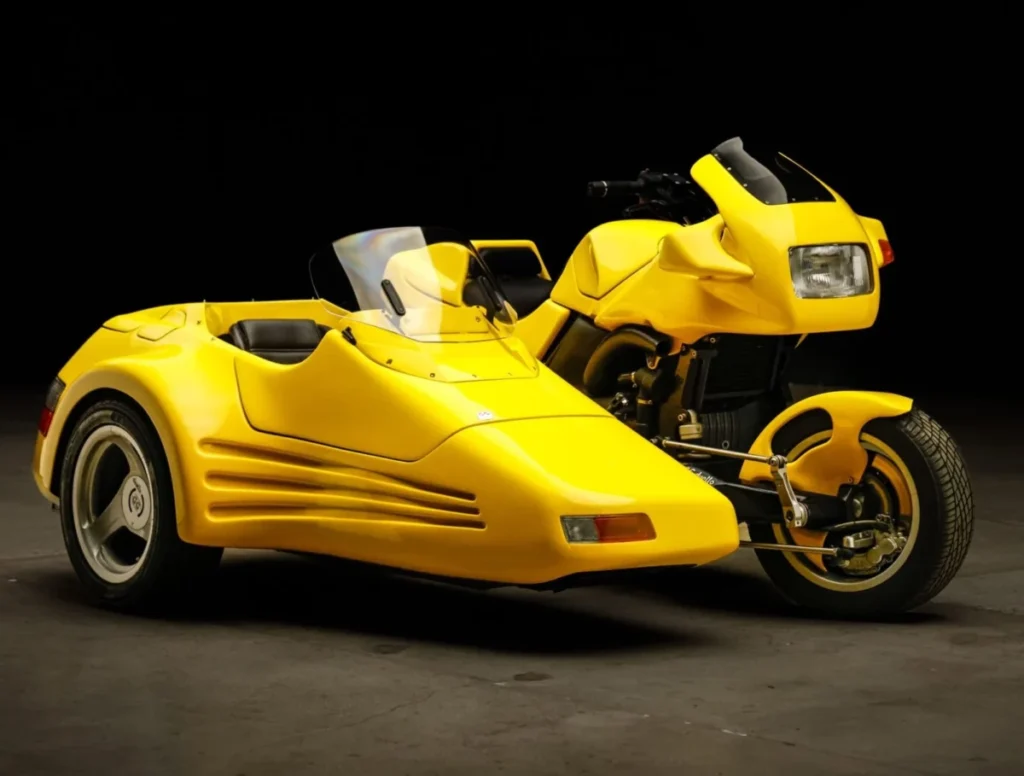

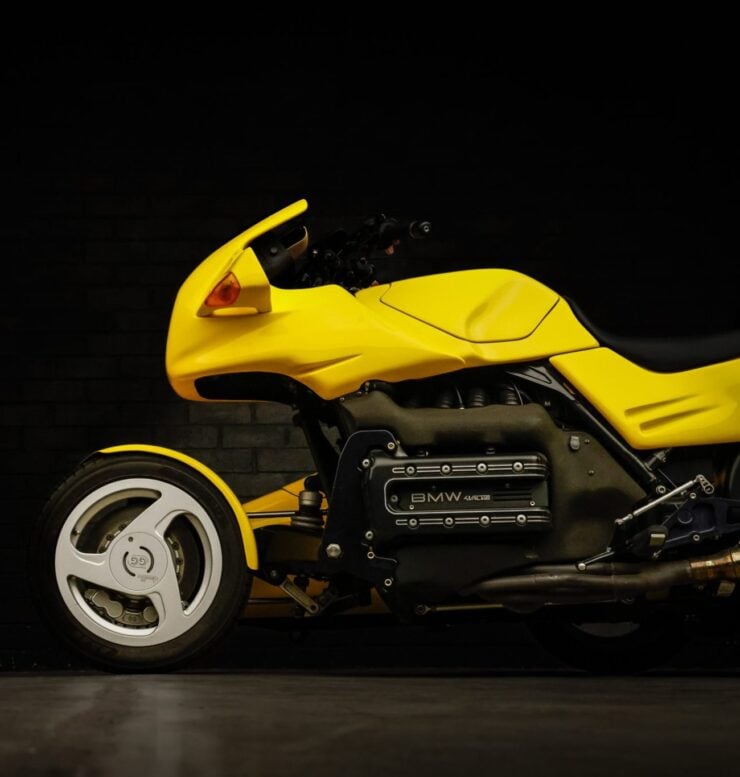
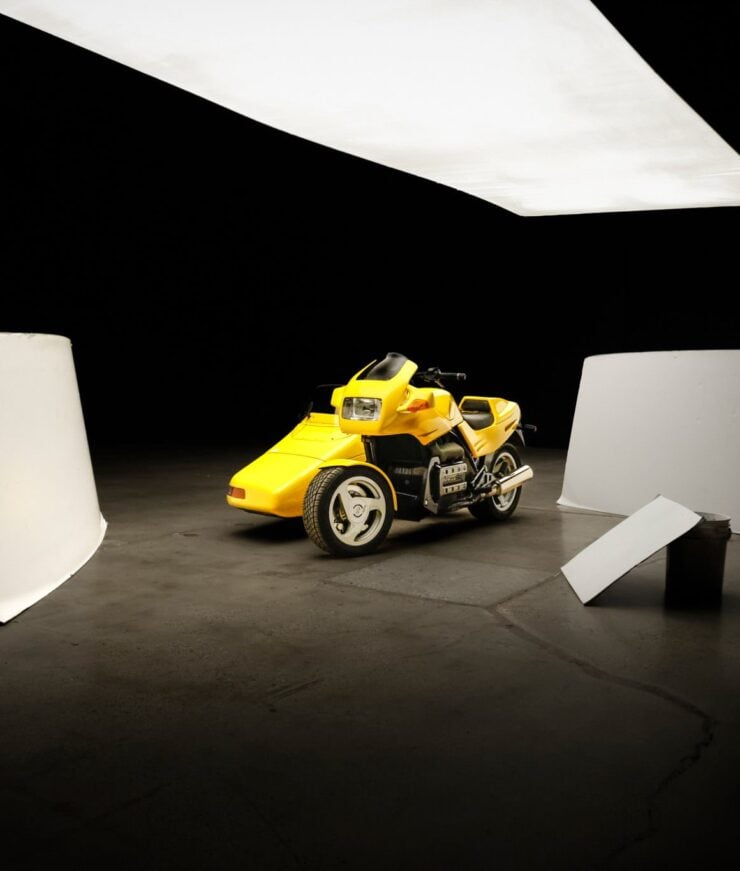
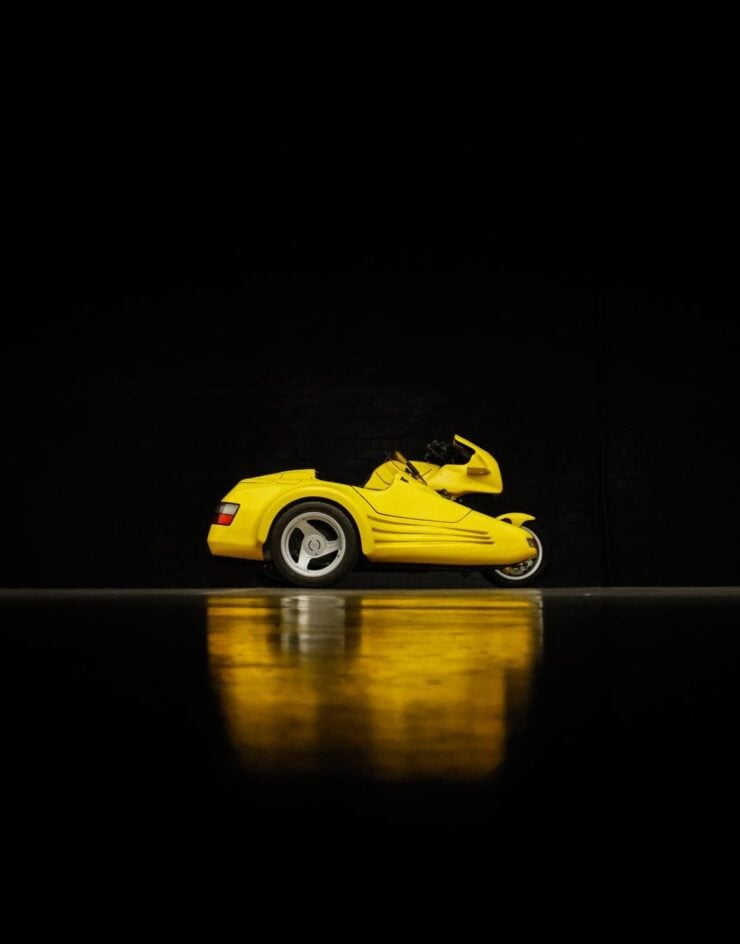
In the rarefied world of high-end, bespoke motorcycling, there are machines that serve as mere transportation and others that function as kinetic sculptures. The 1999 GG Duetto undeniably belongs to the latter category. An ultra-exclusive, Swiss-engineered sidecar outfit, the Duetto represents a "clean-sheet" approach to three-wheeled transport. With only 30 units ever produced, it remains one of the most enigmatic and sophisticated motorcycles to emerge from the late 20th century.
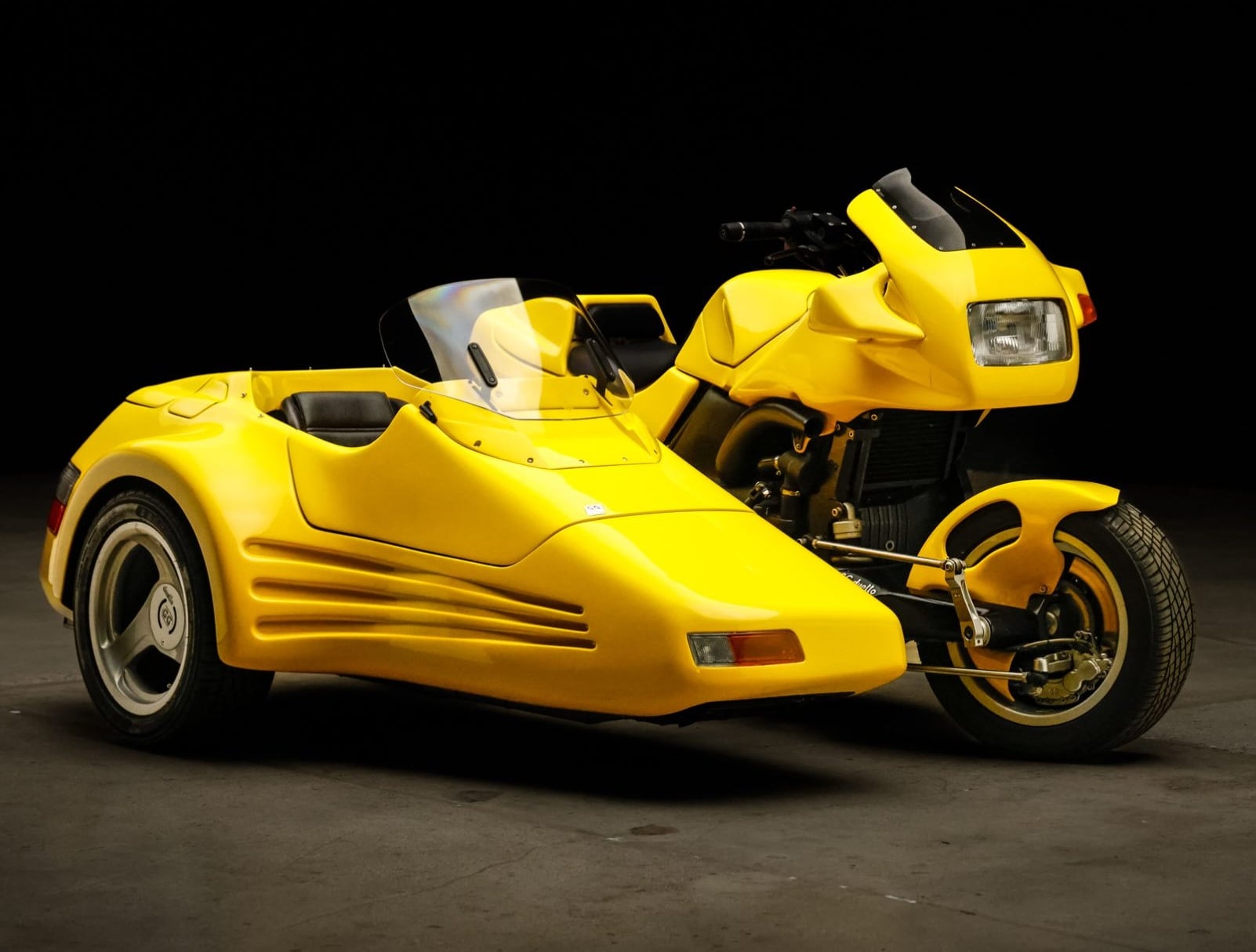
Currently, a pristine example of this mechanical marvel has surfaced in Newbury Park, California, offering a rare glimpse into a boutique era of European engineering. Originally retailing for approximately $50,000 USD in the mid-1990s—a figure equivalent to over $109,000 in today’s currency—the Duetto is less a motorcycle and more a testament to the uncompromising vision of its creators at Grütter + Gut.
The Genesis of an Icon: Grütter + Gut
The story of the Duetto is inextricably linked to the Swiss engineering firm Grütter + Gut Motorradtechnik GmbH. Founded on May 1, 1983, in the canton of Lucerne, the company was the brainchild of motorcycle enthusiasts Walter Grütter and Daniel Gut. Initially, the duo operated as a specialized dealership and service center for Italian marques Moto Guzzi and Ducati, eventually expanding their portfolio to include BMW in 1985.
The firm’s trajectory changed irrevocably in 1986, following the tragic death of Daniel Gut in a sidecar accident. Rather than shuttering the business, Grütter—a trained mechanical engineer—chose to forge ahead, maintaining his late partner’s name on the shingle as a gesture of profound respect.
Under Grütter’s sole leadership, the company transitioned from a service center into a boutique manufacturer. His reputation for precision-machined aftermarket components, particularly for Moto Guzzis, caught the attention of the European motorcycling elite. However, Grütter harbored a greater ambition: he was dissatisfied with the conventional sidecar rigs of the day, which often suffered from poor handling and structural compromises. In 1986, he began conceptualizing an entirely new, fully integrated sidecar machine. It would take eight years of meticulous R&D before the GG Duetto was ready for the public, debuting in 1994.
Chronology: From Prototype to Cult Status
- 1983: Grütter + Gut Motorradtechnik GmbH is founded in Lucerne.
- 1985: The company expands to include BMW dealership services.
- 1986: Following the passing of Daniel Gut, Walter Grütter begins development on a proprietary sidecar chassis.
- 1994: The GG Duetto officially enters production, signaling a new standard for luxury three-wheelers.
- 1996: Cycle World magazine conducts a high-profile test of the only Duetto in North America, labeling it the world’s most sophisticated sidecar.
- 1999: The final production year of the Duetto. A total of only 30 units are completed.
- 2001–2003: The firm’s engineering prowess leads to a lucrative contract with the Swiss Army to convert 600 motorcycles.
- 2024–2025: A rare, well-preserved 1999 model enters the collector market via Bring a Trailer.
Engineering Philosophy: Why the Duetto Defies Convention
The Duetto was never intended to be a "bolt-on" sidecar. Unlike traditional rigs, where a sidecar is attached to an existing motorcycle frame, the Duetto was a purpose-built, integrated vehicle. Because the motorcycle and sidecar chassis were inextricably linked, it was sold as a single, cohesive unit.
The Donor Platform
Grütter selected the BMW K1100LT as the donor platform, attracted by its reliable, liquid-cooled 1,092cc DOHC inline four-cylinder engine. Featuring the sophisticated Bosch Motronic electronic fuel injection system, the engine was factory-rated at 100 bhp at 7,500 rpm and 79 lb-ft of torque. Power was routed through a 5-speed gearbox, though owners could opt for a specialized 4-speed transmission with a reverse gear—a vital addition for a vehicle with a dry weight of 904 lbs.
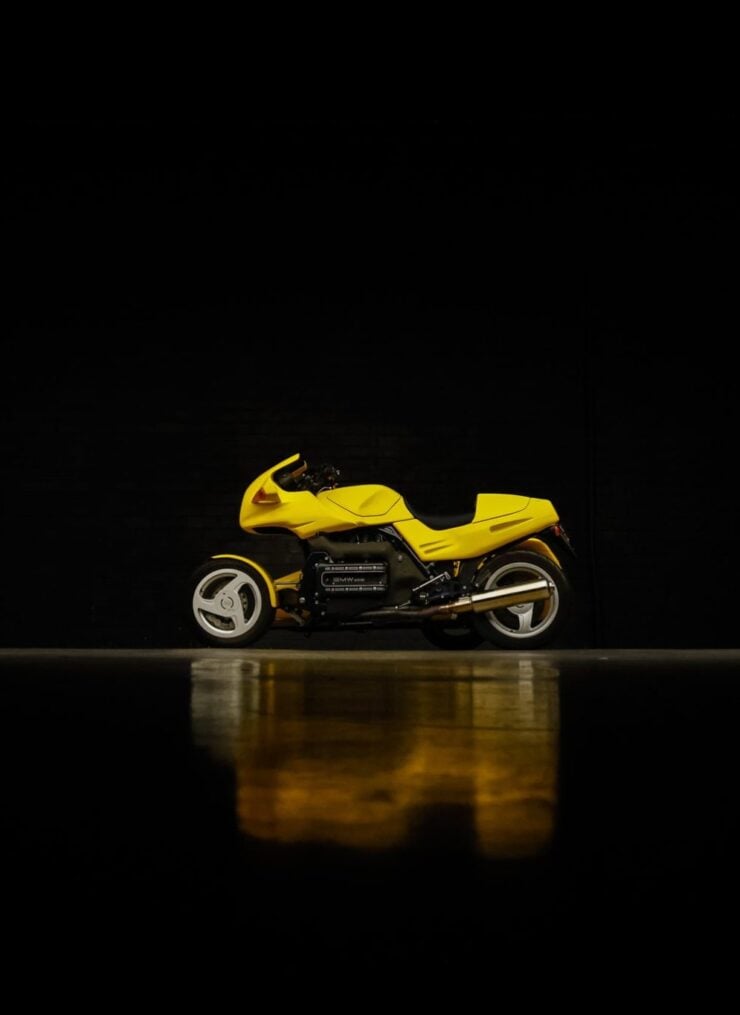
Hub-Center Steering and Suspension
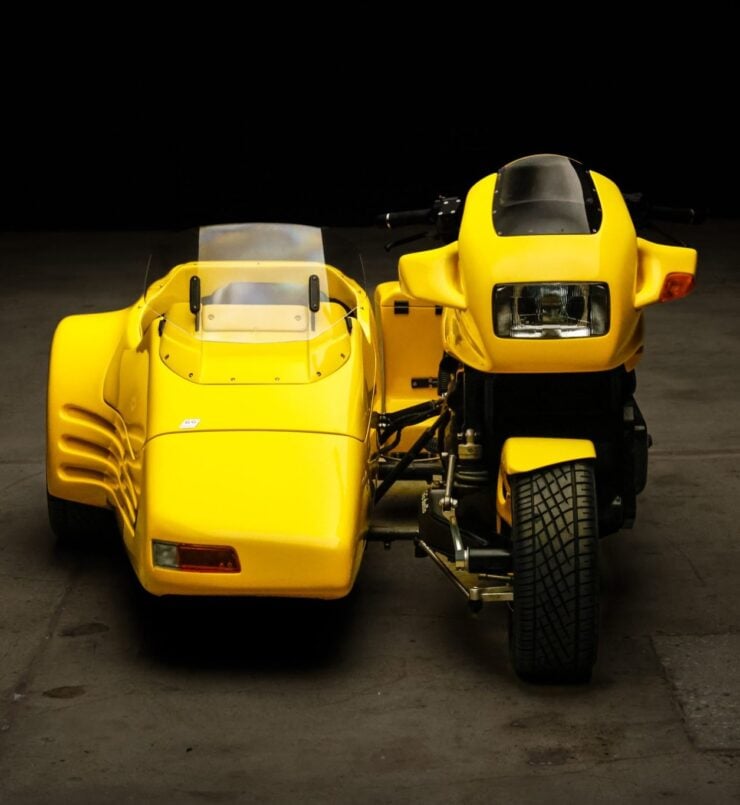
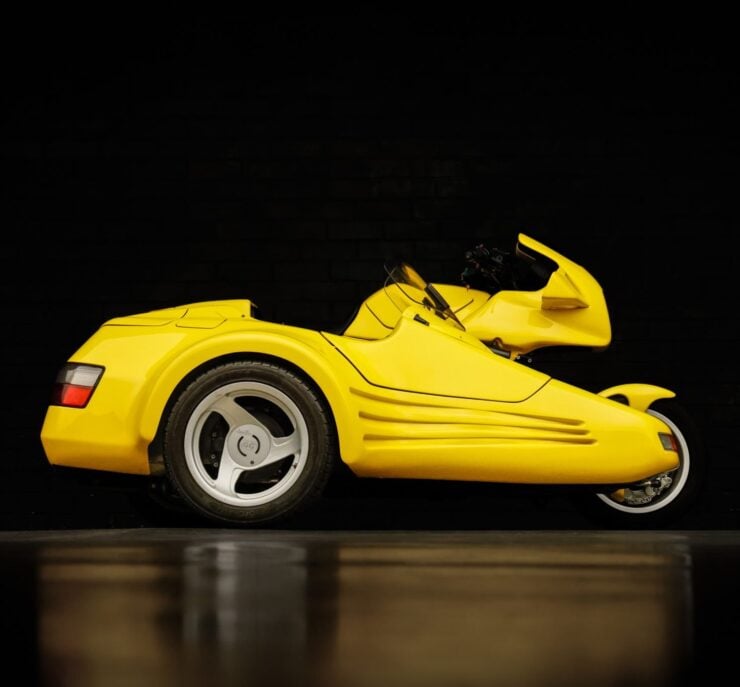
The most revolutionary aspect of the Duetto was its front end. Grütter discarded the standard telescopic forks, replacing them with a custom hub-center steering system. This setup, featuring a single-sided aluminum swingarm, allowed the steering pivot points to reside within the wheel hub, rather than at the headstock. This configuration effectively neutralized the "asymmetric load" issues that plague traditional sidecar handling, providing a stable, precise steering feel even at high speeds.
The suspension was managed by a fully adjustable remote-reservoir WP shock absorber, providing a level of damping rarely seen on three-wheeled vehicles of that era.
Braking and Rolling Stock
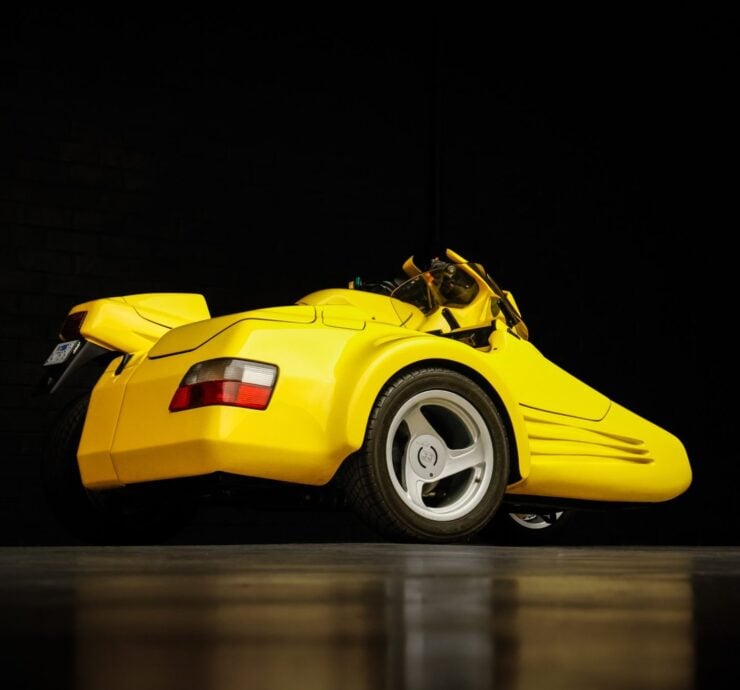
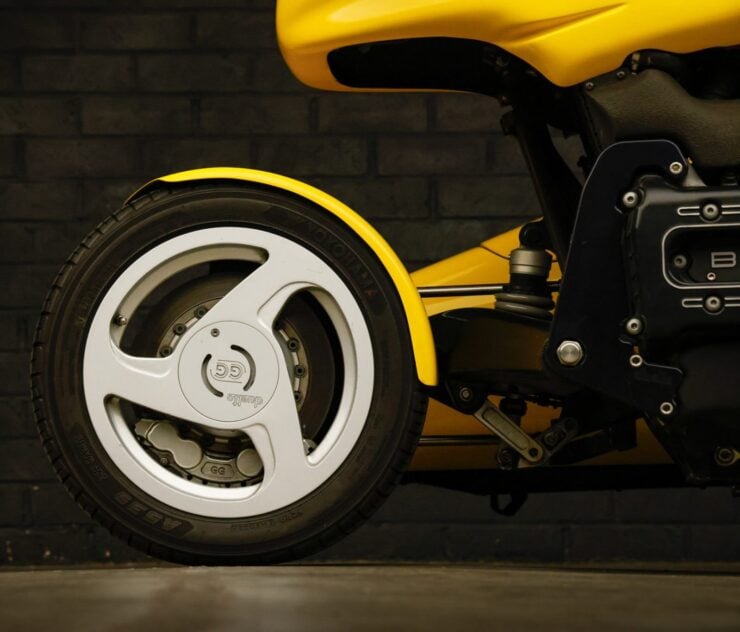
Stopping a 900-pound machine requires significant force, and Grütter ensured the Duetto was over-engineered for the task. The front brake system featured an eight-piston caliper—machined in-house from billet aluminum—clamping a large, ventilated disc. Furthermore, all three wheels were equipped with electronic ABS, an exceptionally rare feature for any motorcycle, let alone a sidecar, in the mid-1990s.
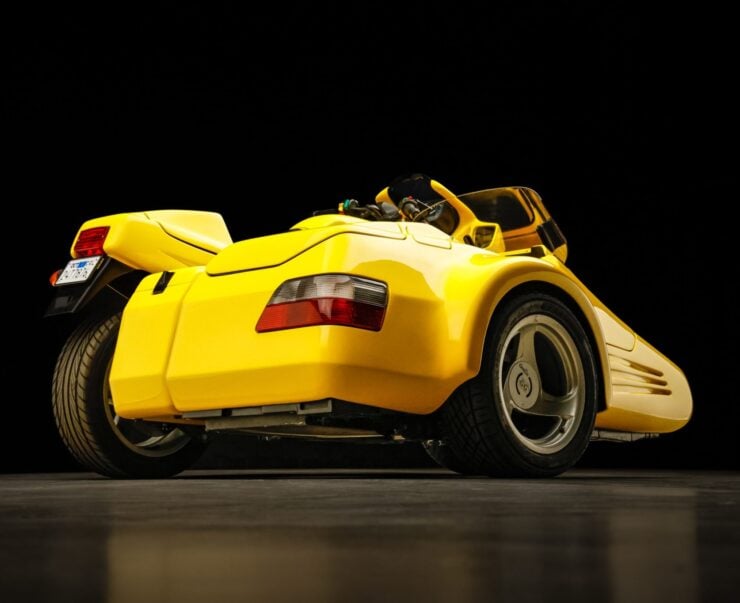
The wheels were bespoke units from Marchesini in Italy. Given that the Duetto did not lean into corners, it utilized "squared-off" performance car tires (185/50-14 VR front and sidecar, 195/50-15 VR rear), ensuring maximum contact patch during aggressive cornering.
Design and Interior: Luxury on Three Wheels
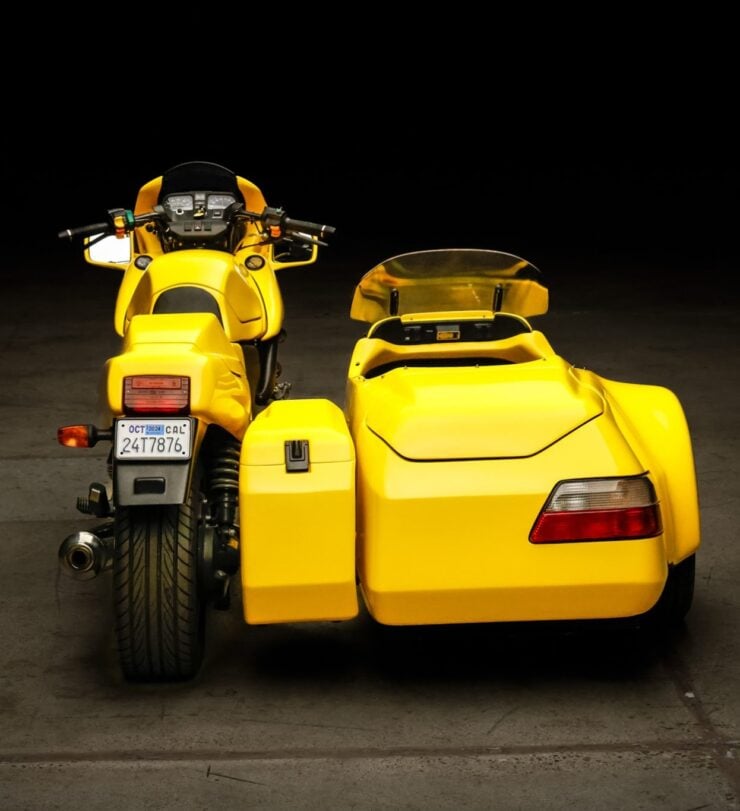
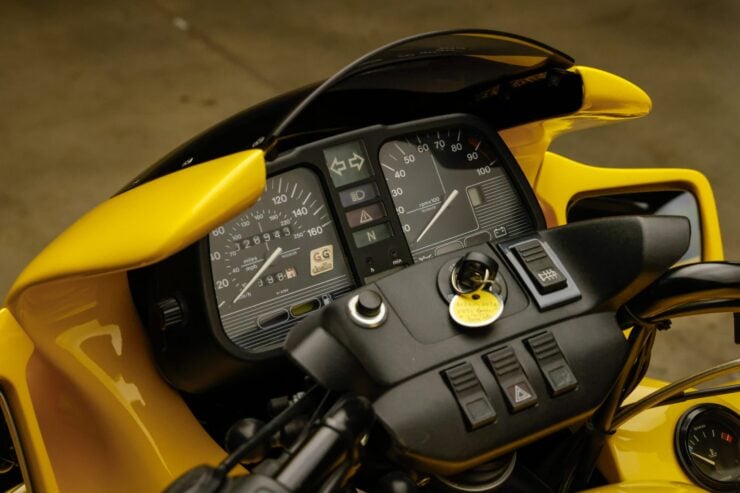
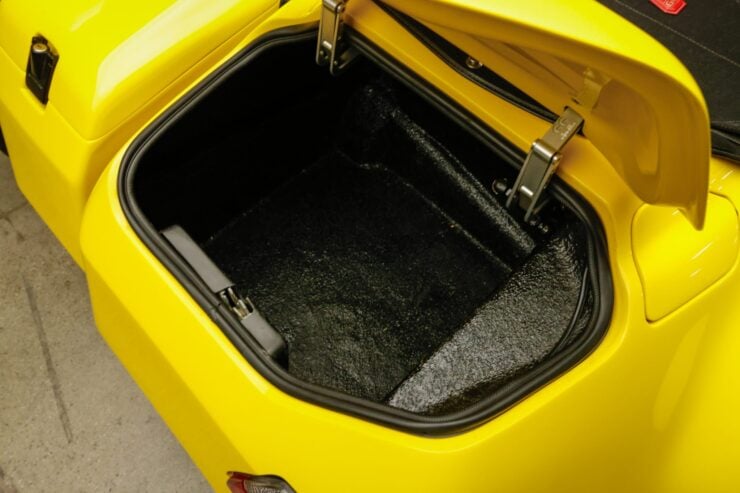
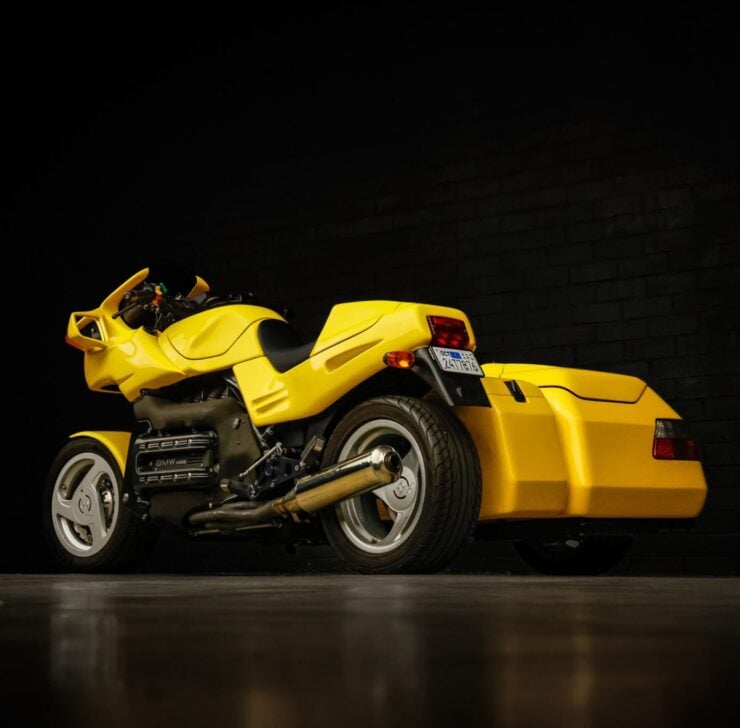
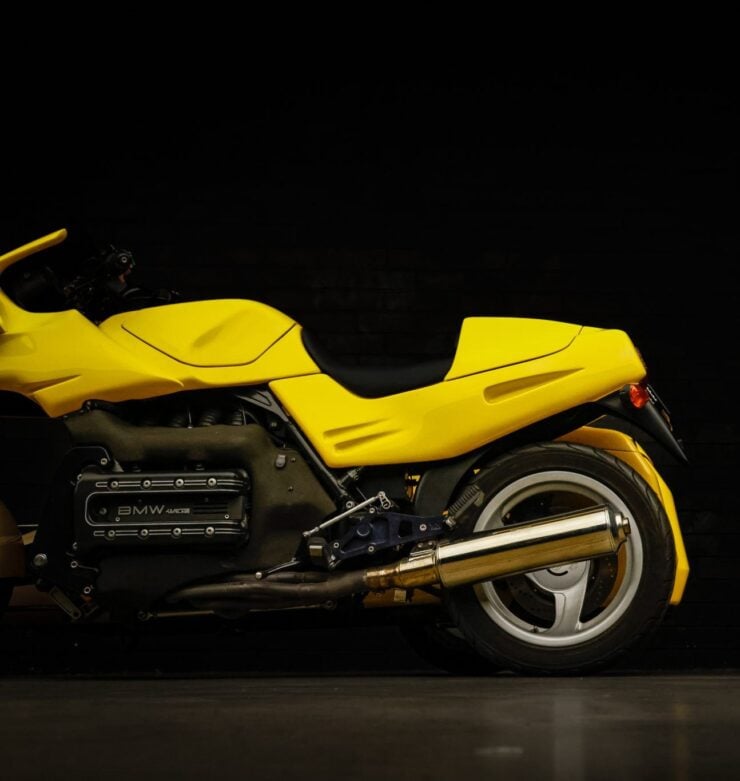
The aesthetic of the Duetto, characterized by its GFK-laminate (glass-fiber reinforced plastic) bodywork, remains striking decades later. The motorcycle features a sculpted half-fairing and a "dummy" fuel tank, which cleverly houses a locking storage compartment.
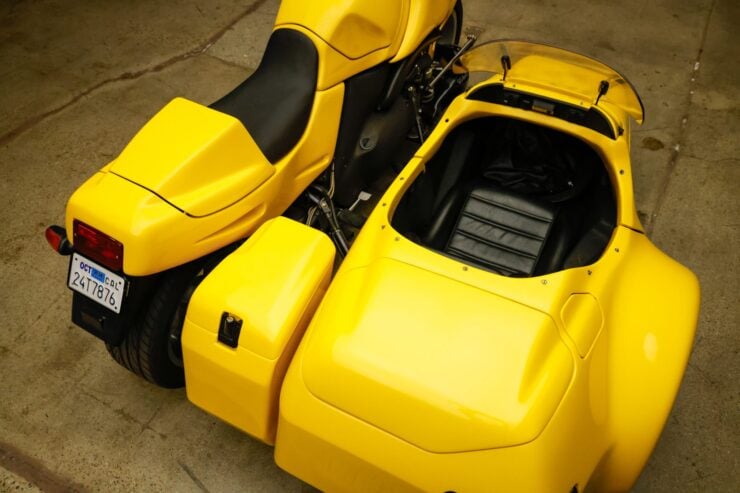
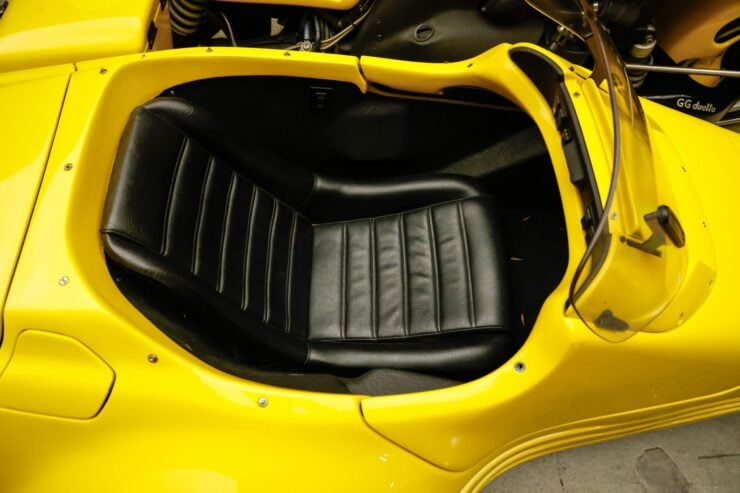
However, the true indulgence is found in the sidecar itself. The passenger compartment mimics a high-end luxury vehicle, complete with a plush BMW bucket seat and premium carpeting. Access is granted via an electronically operated hinged hood, and passengers benefit from an electrically adjustable windscreen. The attention to detail extends to the weight distribution; the fuel tank, battery, and electronic pumps were relocated inboard of the sidecar wheel, lowering the center of gravity and balancing the machine’s weight bias.
Implications for the Collector Market
The emergence of this 1999 model serves as a reminder of the Duetto’s place in automotive history. When it was tested by Cycle World in 1996, the magazine noted that the machine was not merely a novelty but a serious, high-speed touring vehicle.
For the modern collector, the Duetto represents a "Holy Grail" item. With only 30 in existence, provenance is everything. The current listing on Bring a Trailer includes a treasure trove of historical documentation, including original English and German-language brochures, import records, and a copy of BMW Owners News featuring the original owner’s account of visiting the factory in Switzerland to collect the bike.
This documentation is essential for maintaining the value of such an exotic piece. Because Grütter + Gut was the only independent manufacturer in the world to be supplied with motorcycle engines directly from the BMW factory, the Duetto is officially recognized as a unique, limited-production vehicle, bridging the gap between motorcycle and boutique automobile.
Legacy and Impact
The success of the Duetto firmly established Grütter + Gut on the international stage. It served as a proof-of-concept for the firm’s precision-engineering capabilities, eventually leading to their contract with the Swiss Army and the development of subsequent models like the GG Spartaco, the GG Cruso, and the four-wheeled GG Quad.
Yet, it is the Duetto that remains the firm’s magnum opus. It was a machine born of grief and perfected through obsession. Walter Grütter proved that by ignoring the constraints of mass-market manufacturing, one could transform a heavy, utilitarian sidecar into a sophisticated, high-performance touring machine.
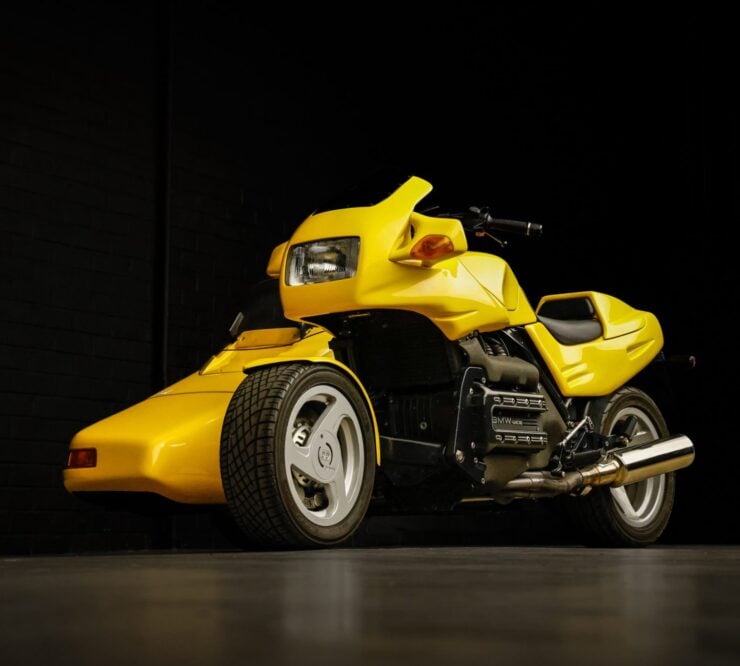
As this 1999 yellow model prepares to find a new home in the garage of a discerning enthusiast, it stands as a monument to a specific, bygone era of Swiss engineering. It is a reminder that when technology, passion, and uncompromising design converge, the result is not just a vehicle, but a piece of history. For the successful bidder, the purchase of the Duetto is not merely an acquisition; it is an act of stewardship for one of the most remarkable motorcycles ever built.