
The freight industry is currently standing at a precarious intersection. On one side lies the promise of increased efficiency and continuous operation; on the other, the reality of 80,000-pound vehicles navigating public infrastructure without a human operator at the helm. This is not a theoretical debate about the merits of automation, nor is it a forecast for the year 2035. It is a critical examination of an ongoing operational shift that is moving faster than the regulatory and social infrastructure designed to govern it.
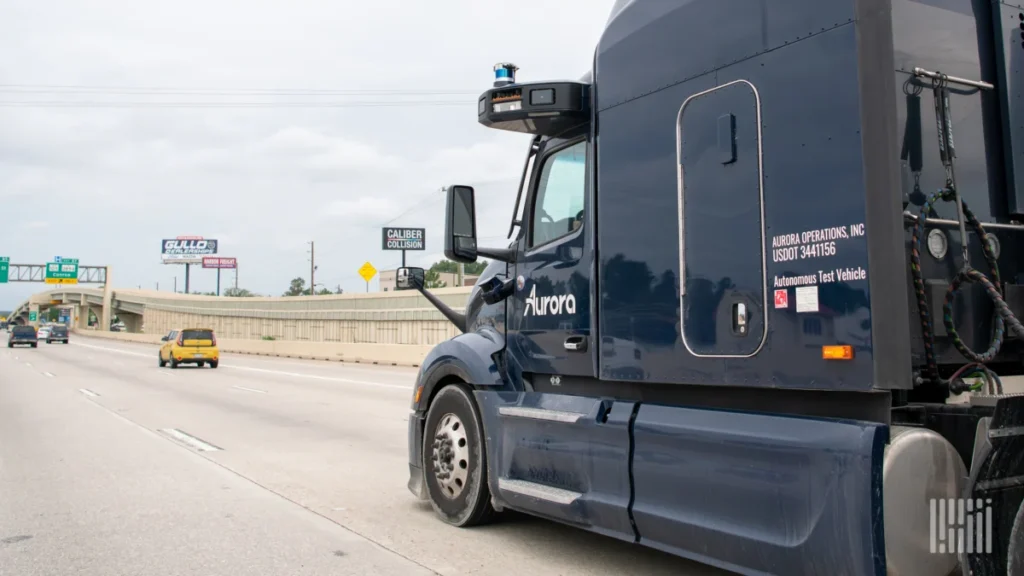
Companies like Aurora Innovation and Kodiak Robotics have moved beyond the "pilot program" phase. They are currently running commercial, driverless Class 8 trucks across the Sun Belt, logging real miles, hauling real freight, and executing concrete plans to scale to thousands of units by the end of 2026. This is no longer a matter of venture-capital-funded press releases; it is a operational reality on the interstate highway system.
The Invisible Layer of Human Expertise
The primary narrative pushed by autonomous trucking developers focuses on the technological ability to steer, brake, and maintain lane discipline. However, this ignores the nuanced "sixth sense" that defines the professional trucker—a layer of situational awareness that remains entirely absent in current autonomous systems.
The Anatomy of Professional Awareness
An experienced driver’s value to highway safety extends far beyond the mechanical act of driving. It is the ability to hear a tire losing pressure before a sensor registers a drop in PSI. It is the physical sensation of a brake pulling to one side before the alignment is measurably off. It is the olfactory recognition of an electrical component beginning to smolder before a fault code is generated.
This is not merely intuition; it is deep-seated pattern recognition. A veteran driver understands the specific "language" of their truck—how it sounds, vibrates, and handles under specific load weights and road surfaces. When a human is removed from the cab, this diagnostic layer disappears. Replacing it requires more than just high-resolution lidar and cameras; it requires a sophisticated, proactive engineering solution that has yet to be proven at the scale of thousands of units.
A Chronology of Rapid Deployment
The transition from concept to asphalt has accelerated at a staggering pace:
- 2021-2023: Autonomous trucking firms focus heavily on testing in the Sun Belt, specifically routes connecting Dallas, Houston, and the Permian Basin, where weather conditions are predictable and highway infrastructure is generally well-maintained.
- April 2025: Aurora Innovation accelerates its software update cycle, pushing four major releases in rapid succession. Each update alters the operational behavior of the vehicles, necessitating rigorous, yet often proprietary, validation processes.
- December 2025: A massive power outage in San Francisco reveals the fragility of autonomous support systems. Waymo robotaxis became immobilized, and the city’s 911 infrastructure was overwhelmed as first responders were forced to manage hundreds of stalled vehicles simultaneously.
- Late 2025/Early 2026: The Governors Highway Safety Association and industry players scramble to initiate first-responder training, an admission that the technology had outpaced the public safety agencies intended to manage it.
The Maintenance Vacuum: A Structural Risk
The autonomous model introduces a "maintenance architecture" that is fundamentally incompatible with the existing roadside assistance landscape. In a traditional setup, a driver is the first line of defense: they identify the problem, secure the scene, deploy warning devices, and communicate the issue to dispatch.
In a driverless scenario, the vehicle must detect its own failure. If a system experiences a "limp mode" event on a remote highway, the vehicle may pull to the shoulder, but it remains a stationary obstacle. The current operational protocol relies on remote operators and a "support vehicle" dispatched from a hub. However, this creates a dangerous "dead zone" of 45 to 60 minutes where the truck sits unmonitored on a high-speed interstate.
The Technician Deficit
Furthermore, the industry faces a looming crisis regarding maintenance. We have a documented shortage of diesel technicians, but there is no pipeline for the specialized workforce required to service sensor arrays, redundant electronic architectures, and software-defined safety systems. These systems require specialized training and diagnostic tools that are not currently available at rural truck stops or regional repair shops. Until this training gap is bridged, the burden of failure will inevitably land on local law enforcement and highway patrol, who are currently under-equipped to handle an 80,000-pound autonomous "brick" on the roadside.
Supporting Data: The Safety Paradox
Industry proponents frequently cite "zero system-attributed collisions" as proof of safety. However, these figures are largely confined to highly controlled environments. To understand the risks of full-scale deployment, one must look at the data from the robotaxi sector, which provides a larger sample size.
According to NHTSA filings, Waymo’s fleet reported 1,429 incidents between July 2021 and November 2025, resulting in 117 injuries and two fatalities. These incidents occurred in urban settings. When applied to 80,000-pound Class 8 trucks at 70 miles per hour in diverse climates—including winter conditions and mountainous terrain—the statistical probability of "edge case" failures increases exponentially.
Official Responses and Regulatory Gaps
Regulators are currently caught between the desire for innovation and the duty to protect the public. The FMCSA has begun to provide exemptions for autonomous trucks regarding hours-of-service regulations, but it has yet to codify the specific, mandatory safety protocols for when these vehicles are disabled.
When questioned, companies emphasize their proprietary safety data. However, this data is self-reported and lacks independent, third-party verification. The silence from regulators regarding the "2 AM breakdown scenario" is becoming increasingly conspicuous. As it stands, there is no federal mandate requiring these companies to fund the necessary training for the thousands of rural fire departments and sheriff’s offices that will be the first to arrive at a scene involving a driverless semi-truck.
Implications: The Future of the Freight Market
The immediate implication for the trucking industry is a bifurcation of the labor market. Autonomous trucks are, for the foreseeable future, confined to hub-to-hub, highway-only operations. They cannot currently handle the "last mile" complexity, dock interaction, or the relationship-driven nature of specialized freight.
What the Industry Must Demand
The professional driver community, the backbone of the American supply chain, possesses the leverage to demand accountability. They should push for:
- Transparency: Access to independently verified, comprehensive safety data that includes "edge cases" and out-of-domain failures, rather than just curated, best-case-scenario statistics.
- Standardized Roadside Protocols: Federal regulations that clearly define the legal and physical responsibilities of an autonomous vehicle operator when a vehicle becomes disabled, including mandatory response times and onsite safety equipment deployment.
- Infrastructure Investment: A dedicated fund, financed by the autonomous industry, to train and equip first responders in all jurisdictions where these trucks operate, not just in urban centers.
- Technician Training Pipelines: A national commitment to vocational training that prepares a new generation of technicians for the specific demands of autonomous electronic and sensor systems.
Conclusion: The Right to Ask
The autonomous revolution is not an inevitability that must be passively accepted; it is a technological integration that must be earned through transparency and public trust. The professional drivers who have spent decades navigating our roads with skill and grit have earned the right to ask hard questions.
If the technology is as robust as the manufacturers claim, then it should be able to withstand the scrutiny of a rigorous, transparent, and public debate. If it cannot, then the industry must pause to reconsider the pace of its deployment. The roads belong to everyone, and the safety of the public should never be treated as an acceptable variable in a venture-backed business model. The empty cab is a powerful symbol of progress to some, but to the millions who share the road with these vehicles, it remains a question mark that demands an honest answer.