
Amazon’s recent decision to open its vast, proprietary logistics infrastructure to the broader business world marks a pivotal shift in the global supply chain landscape. By launching "Amazon Supply Chain Services" (ASCS), the e-commerce giant is effectively transitioning from being a retailer that happens to have a delivery network to becoming a global logistics powerhouse. While industry analysts suggest this move is unlikely to topple incumbents like FedEx or UPS overnight, it undoubtedly casts a long shadow over the sector, challenging the traditional competitive dynamics of freight, warehousing, and parcel delivery.
Main Facts: The Scope of Amazon’s Logistics Ambition
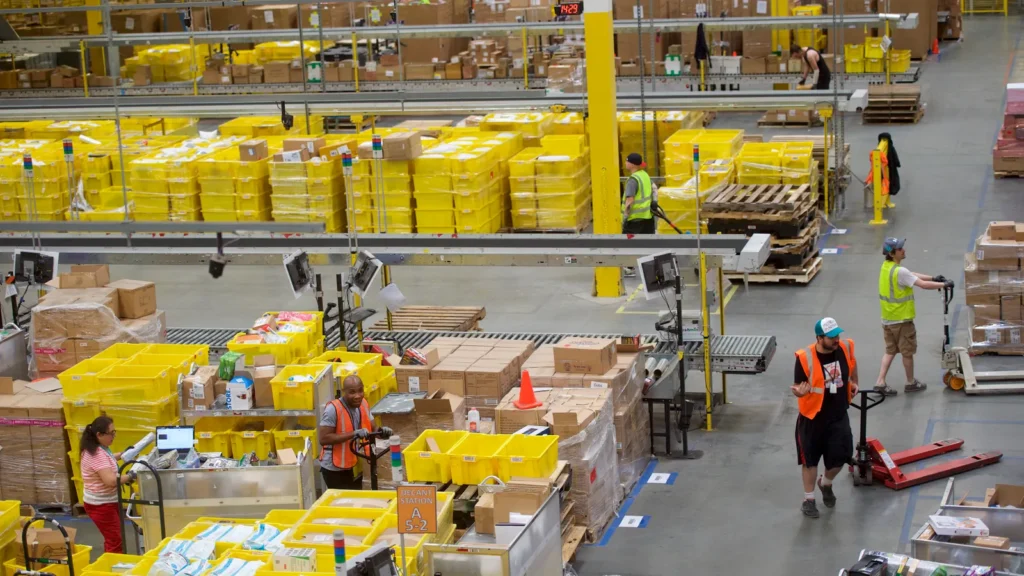
On May 4, Amazon formally unveiled its consolidated logistics portfolio, Amazon Supply Chain Services. This platform allows companies of all sizes to tap into the same massive network of fulfillment centers, trailers, intermodal containers, and aircraft that Amazon uses to power its own retail operations.
The service is comprehensive, covering the entire journey of a product from the factory floor to the customer’s doorstep. Key capabilities include:
- Amazon Air Cargo: Leveraging over 100 aircraft and 250 daily flights for rapid regional delivery and international charter needs.
- Amazon Global Logistics: Facilitating inbound shipping from manufacturing hubs in China, Japan, and Vietnam into Amazon’s global fulfillment network.
- Amazon Freight: A multimodal transportation service utilizing over 24,000 intermodal containers and 80,000 trailers for both full-truckload (FTL) and less-than-truckload (LTL) shipments.
- Amazon Shipping: A dedicated two-to-five-day ground parcel delivery service covering the contiguous United States.
- Warehousing and Distribution: Providing low-cost bulk storage and automated inventory replenishment across multiple sales channels.
By bundling these services, Amazon is offering a "one-stop-shop" model that few, if any, existing logistics providers can match in terms of scale and integrated data visibility.
A Chronology of Expansion
Amazon’s entry into logistics was not a sudden pivot but a decade-long evolution. The company’s trajectory highlights a clear strategy of vertical integration:
- Early Years: Amazon relied exclusively on third-party carriers like UPS and FedEx to handle its packages, leading to occasional bottlenecks during high-volume periods like the holiday season.
- 2010s: Recognizing the risk of dependence, Amazon began building its own "last-mile" delivery network, investing heavily in branded delivery vans, local sorting centers, and its own fleet of aircraft.
- The Fulfillment by Amazon (FBA) Era: Amazon began allowing third-party sellers on its marketplace to use its warehouses and delivery network, creating a massive, captive customer base for its logistics services.
- 2020–2023: Amazon began testing its logistics capabilities with non-marketplace brands, quietly rolling out "Amazon Shipping" and "Multi-Channel Fulfillment" (MCF) to help external brands manage their own direct-to-consumer websites.
- May 2024: The formal launch of ASCS serves as the culmination of these efforts, rebranding and expanding these services to serve any business, regardless of whether they sell on the Amazon marketplace.
Supporting Data: The Logistics Infrastructure at Scale
To understand the competitive threat, one must look at the sheer volume of assets at Amazon’s disposal. Unlike traditional 3PLs (third-party logistics providers) that often rely on a network of contracted carriers, Amazon owns or long-term leases the majority of its assets.
| Service Component | Key Assets |
|---|---|
| Air Freight | 100+ aircraft, 250+ daily flights |
| Intermodal/Rail | 24,000+ owned containers |
| Truckload | 80,000+ trailers (53-foot dry vans) |
| Global Reach | Inbound logistics from Asia to U.S., UK, EU, and Japan |
The integration of these assets allows Amazon to achieve a level of "inventory velocity" that is difficult to replicate. For instance, by leveraging "Amazon Warehousing and Distribution," companies can store goods at low cost and trigger automated replenishment to any sales channel, whether that be their own website, a physical retail store, or an Amazon storefront.
Official Responses and Industry Perspectives
The reception from the logistics community has been a mixture of caution and acknowledgment of Amazon’s competitive edge.
Derek Lossing, founder of Cirrus Global Advisors and a former logistics leader at Amazon, notes that while none of the individual services are necessarily "transformational," the act of bundling them is the true disruptor. "If you can truly bundle it all together, it’s powerful, and it’s more powerful than what any individual company offers," Lossing observed.
From the perspective of parcel giants, the threat is nuanced. Nate Skiver, a parcel analyst and founder of LPF Spend Management, points out that Amazon Shipping primarily threatens smaller, regional carriers whose only differentiator is price. FedEx and UPS, meanwhile, are shifting their focus toward high-margin, complex logistics (such as healthcare and temperature-controlled shipping), essentially ceding the lower-margin, lightweight e-commerce market to Amazon.
Amazon, for its part, maintains that its services are designed to improve the supply chain for everyone. In response to inquiries about data privacy and potential conflicts of interest, an Amazon spokesperson stated: "Amazon uses the data logistics customers share to operate and improve its services. We prohibit using sales data received or collected from ASCS customers to make sourcing, inventory level, or pricing decisions for products in our own store."
Implications: The Road Ahead for Shippers
For businesses, the arrival of ASCS presents a complex set of trade-offs.
The "One-Stop-Shop" Advantage
For fast-growing, direct-to-consumer brands, the ability to outsource the entire supply chain—from origin to customer—is highly attractive. It removes the need to coordinate between an ocean freight forwarder, a warehousing firm, and a separate parcel carrier. Brands like KiwiCo and Bark have already leveraged these services to scale rapidly.
The Risks of Concentration
However, experts warn of potential "bottlenecks." As Amazon’s infrastructure is tested by the influx of external volume, companies may face capacity constraints, particularly during peak holiday seasons. There is also the "trust" factor; businesses are wary of handing their supply chain data to a company that is simultaneously one of their largest competitors in the retail space.
The Regulatory Shadow
Amazon’s expansion will almost certainly draw further scrutiny from regulators. The company has previously faced investigations regarding its use of seller data. As it becomes the logistics provider for its own competitors, Amazon will need to tread carefully to maintain the "Chinese wall" between its logistics arm and its retail marketplace.
A New Era of Competition
In the near term, we can expect a "price war" in the lightweight parcel segment. Smaller carriers will be forced to differentiate through superior customer service or specialized handling, as they will struggle to match Amazon’s economies of scale. Meanwhile, the enterprise logistics sector will watch closely to see if Amazon can successfully manage the complexity of non-marketplace supply chains.
Conclusion
Amazon Supply Chain Services is not merely a new product offering; it is an expansion of the company’s operating system into the bedrock of global commerce. While FedEx, UPS, and other legacy providers remain essential, they are now forced to operate in an environment where the world’s largest e-commerce platform is also their most formidable competitor. For brands, the decision to partner with Amazon will be driven by a balance between the efficiency of the platform and the desire to maintain independence from the retail giant that controls the digital storefronts of the world. As the market matures, the true test for ASCS will be whether it can maintain its legendary efficiency while serving clients whose priorities—and businesses—lie entirely outside of the Amazon ecosystem.