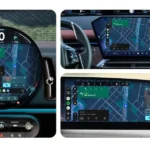
In a significant move affecting a broad spectrum of its current luxury lineup, Mercedes-Benz has issued a safety recall for more than 144,000 vehicles. The recall centers on a critical software defect within the infotainment control unit, a flaw that has the potential to cause the digital instrument cluster to go blank, effectively cutting the driver off from essential vehicle information while the car is in motion.
As modern vehicles become increasingly reliant on integrated software architectures, this incident highlights the growing complexity—and vulnerability—of automotive digital systems. For owners of the affected high-performance and luxury models, the recall serves as a stark reminder of the safety risks associated with software-defined vehicle environments.
Understanding the Glitch: The Infotainment-Instrument Cluster Connection
At the heart of the recall is the infotainment control unit’s internal logic. According to documents filed with the National Highway Traffic Safety Administration (NHTSA), the software controlling the infotainment system is prone to experiencing an excessive number of system resets.

Under normal operating conditions, a minor software glitch might cause a brief flicker or a momentary reboot of a non-essential feature. However, in these specific Mercedes-Benz models, the architecture is designed in a way that allows the infotainment control unit to influence the digital instrument cluster. When the system initiates these frequent, unintended resets, the communication between the infotainment processor and the instrument cluster display is severed.
This results in the driver’s primary display—which conveys critical data such as vehicle speed, warning lights, transmission gear position, and navigation prompts—turning completely blank. The loss of this information, particularly at highway speeds or in complex traffic scenarios, poses a significant safety risk. The driver may become unaware of sudden speed changes or critical system warnings, potentially contributing to an increased likelihood of a collision.
Affected Models and Scope
The scope of this recall is extensive, covering a wide variety of popular Mercedes-Benz models manufactured between the 2024 and 2026 model years. Because these models share a common MBUX (Mercedes-Benz User Experience) software architecture, the flaw is not limited to a single vehicle platform.

The affected models include:
- Mercedes-AMG GT: The brand’s flagship performance coupe.
- C-Class: The staple luxury sedan.
- E-Class: The executive mid-size luxury offering.
- SL-Class: The iconic luxury roadster.
- CLE-Class: The newer two-door coupe/convertible replacement.
- GLC-Class: The best-selling luxury SUV in the Mercedes portfolio.
With over 144,000 vehicles identified, this recall represents a substantial logistical undertaking for Mercedes-Benz dealerships globally. Owners of these vehicles are advised to pay close attention to correspondence from the manufacturer.
Chronology of the Issue
The path to this recall was not immediate, reflecting the slow and methodical process of root-cause analysis in automotive software engineering.

- Initial Discovery: Mercedes-Benz internal quality monitoring systems began identifying isolated reports of instrument cluster displays failing to initialize correctly or turning black during operation.
- Investigation Phase: Engineering teams began analyzing log files from the reported vehicles. They identified that the infotainment control unit was entering a "reset loop" caused by a specific software instruction conflict.
- Confirmation of Risk: Following rigorous testing in both lab environments and test vehicles, engineers confirmed that the reset cycle was frequent enough to cause the instrument cluster to remain dark for extended, dangerous periods.
- Reporting to NHTSA: Having determined that the glitch constituted a "safety-related defect," Mercedes-Benz formally notified the National Highway Traffic Safety Administration in accordance with federal law.
- Public Notification: Following the regulatory filings, the official recall notification process was initiated to inform vehicle owners and coordinate the rollout of the necessary software update.
The Role of Software in Modern Vehicle Safety
The Mercedes-Benz recall is a microcosm of a larger trend in the automotive industry: the shift from hardware-centric design to software-defined architecture. While this transition enables advanced features like augmented reality navigation, over-the-air updates, and sophisticated driver-assistance systems, it also introduces systemic risks that were previously uncommon in the mechanical era of automotive manufacturing.
When an infotainment system was merely a radio and a CD player, a crash meant only a lack of music. Today, the infotainment unit acts as the "brain" for much of the vehicle’s interior interface. When that brain fails, it can take down the "eyes" of the driver—the instrument cluster.
Experts in automotive cyber-physical systems suggest that as manufacturers move toward centralized computing architectures, the importance of robust software validation becomes paramount. A single line of code, if improperly executed, can now have cascading effects on safety-critical components, leading to situations that require mass recalls rather than simple "glitch fixes."

Official Response and Mitigation Strategies
Mercedes-Benz has stated that it is taking all necessary steps to rectify the issue. The company’s primary mitigation strategy is a software patch. Because these vehicles are equipped with advanced connectivity features, many owners might assume that this issue could be solved with an Over-the-Air (OTA) update. However, the complexity of the fix often requires a formal visit to a dealership to ensure the update is installed correctly and to verify the stability of the control unit post-installation.
What Owners Should Do:
- Check for Recall Notices: Owners should visit the NHTSA recall portal or the Mercedes-Benz recall website and enter their Vehicle Identification Number (VIN) to confirm if their specific car is included.
- Contact Dealerships: Once the recall is confirmed, owners should contact their local authorized Mercedes-Benz service center to schedule an appointment.
- Prioritize Safety: If a driver experiences a blank instrument cluster while driving, they should remain calm, pull over safely to the side of the road if possible, and restart the vehicle. This may force the system to reboot, though it is only a temporary fix and not a permanent solution.
- Monitor Official Communications: Mercedes-Benz is expected to send out formal letters to registered owners with specific instructions on when to bring their vehicles in for service.
The Implications for the Luxury Automotive Market
For a brand synonymous with engineering excellence and technological innovation, a recall of this magnitude carries significant weight. Mercedes-Benz has long marketed its MBUX system as the industry standard for user interface design. This incident suggests that even the most prestigious brands are struggling to maintain stability as they push the boundaries of vehicle connectivity.
The financial and reputational implications are twofold. First, there is the direct cost of the recall—the labor hours for technicians, the logistics of notification, and the management of customer frustration. Second, there is the erosion of consumer confidence. Buyers of luxury vehicles expect "bulletproof" reliability; when a vehicle’s primary dashboard interface fails, it strikes at the core of the luxury ownership experience.

Furthermore, this recall may lead to increased scrutiny from regulators. As NHTSA continues to broaden its oversight of vehicle software, we can expect more stringent requirements for "fail-safe" mechanisms in digital displays. Future designs may be required to include a hard-wired, independent backup for essential information, ensuring that even if the main computer fails, the driver is never left without a speedometer or critical warning lights.
Conclusion
The recall of 144,000 Mercedes-Benz vehicles serves as a cautionary tale for the entire automotive sector. As the industry races toward electrification and increased automation, the software that powers these vehicles must be held to the same safety standards as the braking and steering systems of the past.
For the affected owners, the process of resolving this software glitch will be an inconvenience, but one that is necessary to ensure the continued safe operation of their vehicles. As Mercedes-Benz works through the technical solution, the automotive community will be watching to see how the company reinforces its software development pipeline to prevent similar systemic failures in future generations of the AMG GT, C-Class, E-Class, and beyond. In the modern age, a luxury vehicle is only as good as the code that drives it—and this recall is a clear call for higher standards in digital automotive reliability.