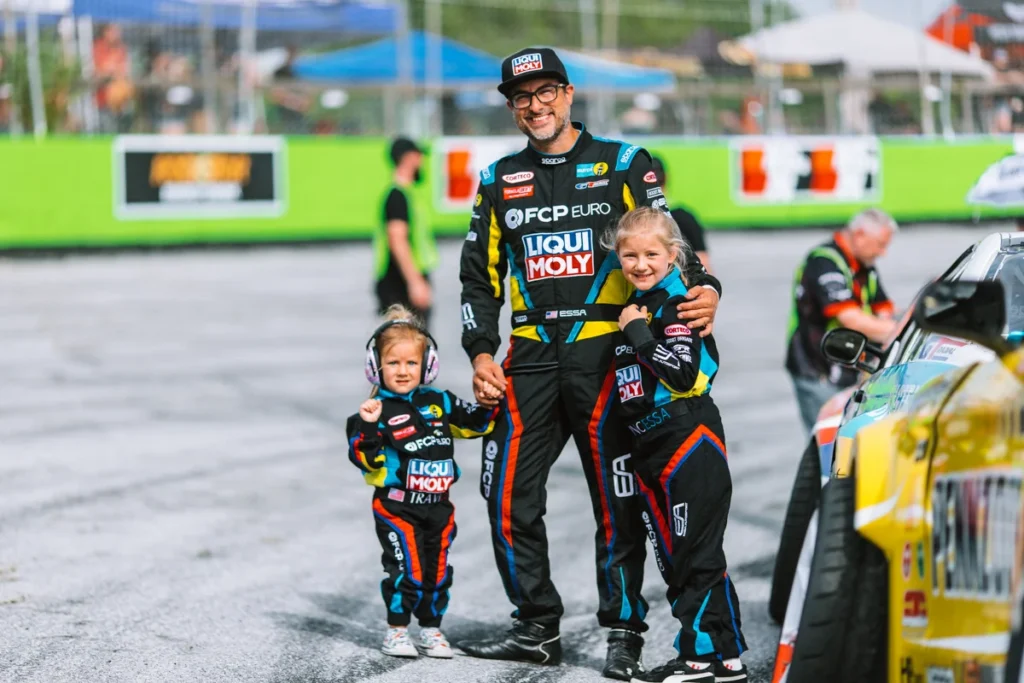

The world of professional drifting is as much a test of mechanical endurance as it is of driver precision. For Michael Essa and his team, the recent Formula Drift event at the Orlando Speed World track served as a masterclass in crisis management, technical adaptation, and competitive grit. Navigating through fluctuating weather conditions and mechanical setbacks, the team showcased the kind of resilience that defines elite motorsport.

The Mechanical Crucible: Initial Challenges
The weekend began under a cloud of uncertainty. During the Thursday practice sessions, it became immediately apparent that the team’s BMW E46 was not performing to its potential. Essa noted a significant deficit in power, specifically reporting that the vehicle felt sluggish during the crucial initiation phase through to the mid-bank.

Advanced telemetry data confirmed the driver’s suspicions: boost levels were hovering at a mere 50% of the target. For a platform that relies on precise power delivery to maintain the high-angle slides required for top-tier competition, a 50% loss in boost is catastrophic.
Despite the lack of power, the crew refused to let the session go to waste. They focused their efforts on fine-tuning the chassis, dialing in suspension settings, and meticulously adjusting tire pressures to optimize grip. It was only after the conclusion of the practice session, during a deep-dive inspection, that the team discovered a critical failure point: a fracture in the intercooler end tank. With the culprit identified, the team transitioned from diagnostic mode to emergency repair, welding the tank back to integrity and preparing the E46 for the intensity of Friday’s schedule.

Chronology of a Competitive Climb
Friday: Finding the Rhythm
With the boost issue resolved, Friday’s practice sessions were vital for re-acquainting the driver with the car’s full power potential. The team successfully completed four laps, using the time to recalibrate the suspension and throttle response to match the newfound engine performance.
The momentum carried into the single-lap qualifying session. In the high-pressure environment of professional drifting, where one mistake can result in a zero-score, Essa delivered a clean, aggressive run. The judges rewarded his precision with a 90-point score, a respectable result that secured the 9th qualifying position and set the stage for the Saturday bracket.

Saturday: The Rain-Soaked Battle
Saturday morning provided a rare opportunity to connect with the fanbase. With the grandstands at capacity and the paddock buzzing with energy, the team displayed the E46, allowing fans to get an up-close look at the engineering behind the drift machine. However, the atmosphere shifted as the afternoon progressed.

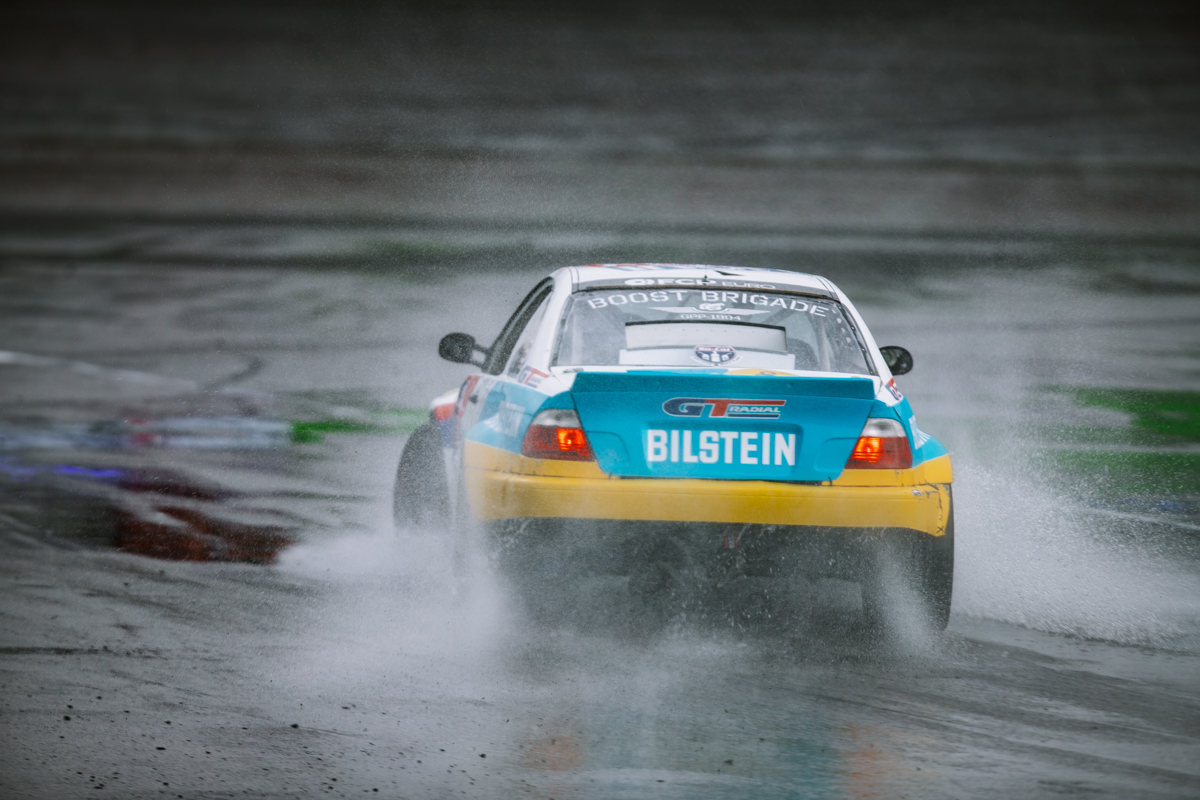
Just minutes before the Top 32 bracket began, the Florida skies opened up. Rain turned the track into a technical nightmare, forcing the team to pivot instantly. They swapped the dry-weather setup for a wet-weather configuration, a gamble for a car that hadn’t seen a single wet lap all weekend.

Matched against Ryan Litteral in the Top 32, Essa displayed remarkable composure. Benefitting from his higher qualifying position, he led the first run, executing a flawless line. In the chase position, he balanced aggression with caution, maintaining close proximity to Litteral without overdriving in the slippery conditions. The strategy paid off, and the judges signaled for the win, advancing Essa to the Top 16.

The Top 16 and Great 8 Showdowns
By the time the Top 16 battle commenced, the track had begun to dry, necessitating yet another setup change. Facing off against Kazua Taguchi, who had out-qualified him by a single spot, the stakes were high. With the car back in its dry-weather configuration, the battle was a test of pure speed and proximity. Taguchi faltered under the pressure, committing several major errors, which allowed Essa to capitalize and move forward to the Great 8.

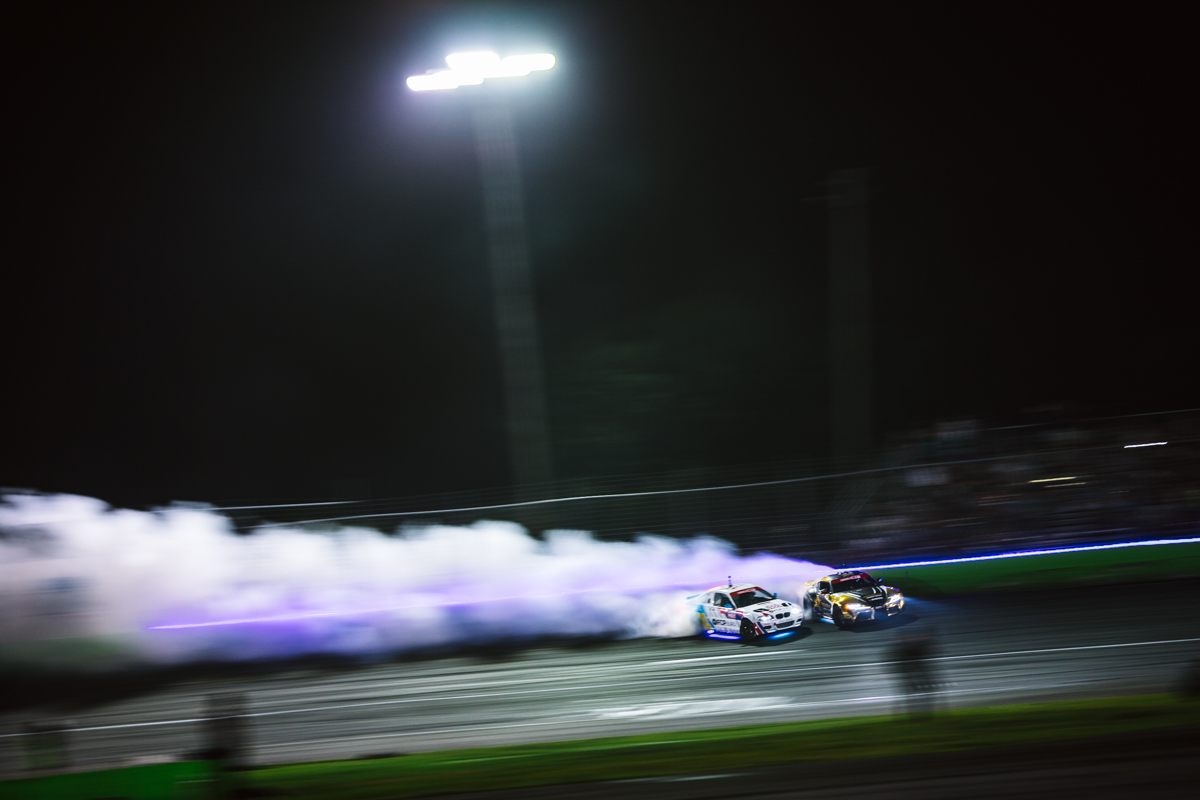
The Great 8 match-up pitted Essa against the formidable Fredric Aasbo. This was the defining moment of the weekend. Recognizing the need for increased mechanical grip, the team adjusted the suspension once more. The battle was a high-octane affair; at one point, the intensity of the proximity resulted in wheel-to-wheel contact as Essa’s front wheel clipped Aasbo’s door. The Enkei RS05RR wheels proved their structural integrity, showing no signs of deformation or failure, which allowed the team to bypass the "5-minute rule" repair window and remain in the competition.

Technical Analysis: The Role of Hardware
In professional drifting, the wheel is not merely a cosmetic choice; it is a critical component of the suspension geometry and unsprung weight. The performance of the Enkei RS05RR during the contact with Aasbo’s vehicle is a testament to modern manufacturing standards.

When a drift car makes contact with another vehicle at high speed, the force exerted on the suspension and wheels is immense. Often, such contact results in bent tie rods, cracked rims, or compromised alignment. The fact that the RS05RR remained "unfazed," as described by the team, is significant. It allowed the driver to maintain confidence in the car’s handling for the remainder of the heat, ensuring that no time was lost to repairs. This level of reliability is what allows teams to compete at the highest level of Formula Drift, where every second spent in the pits is a potential loss of rhythm and momentum.

Official Perspective and Controversies
The conclusion of the Great 8 battle was not without controversy. While Essa’s lead run was widely regarded as technically superior, the judges’ decision to favor Aasbo sparked debate among spectators. Aasbo’s pursuit was admittedly close, but it was noted that his line through the corner was unconventional—a "cheated" line, in the eyes of many, designed to mimic proximity at the expense of proper drifting technique.

Ultimately, the judges awarded the win to Aasbo. Despite the disappointment of being knocked out of contention, the team maintained a professional demeanor. The event served as a reminder that in judged motorsports, subjectivity remains an inherent variable. The team chose to focus on the positives: the car’s performance, the successful mid-event repairs, and the meaningful engagement with the fans.

Broader Implications for the Season
Reflecting on the weekend, Michael Essa expressed a balanced perspective on the results. "Overall, we felt that it was a good weekend," Essa stated. "The car performed well, and my team worked hard. We got to meet and interact with many fans and promote our sponsors."

This sentiment underscores a critical reality of the professional drift circuit: success is not measured solely by podium finishes. It is measured by the ability to solve complex engineering problems on the fly, the reliability of the equipment under duress, and the ability to maintain competitive relevance in a field that is constantly evolving.

The performance at Orlando provides several key takeaways for the remainder of the season:

- Adaptive Engineering: The team’s ability to weld an intercooler end tank and swap setups between wet and dry conditions proves that their logistics and mechanical support are top-tier.
- Data-Driven Performance: The identification of the 50% boost deficit via telemetry demonstrates the reliance on data to bridge the gap between driver feedback and mechanical reality.
- Consistency Under Fire: By successfully navigating through the Top 32 and Top 16, the team has proven that their consistency is high, which will be essential as the competition moves to New Jersey.
As the team looks toward the next round in New Jersey, they carry with them the lessons of Orlando. The adjustments made to the suspension, the validation of their wheel choices, and the refined communication between driver and crew during high-stress battles will serve as the foundation for their next push.

In the high-speed, high-stakes world of Formula Drift, the journey is rarely a straight line. For Michael Essa, the Orlando event was a testament to the fact that when the pressure mounts, the ability to adapt, recover, and remain competitive is what separates the contenders from the rest of the pack. With the car in good health and the team’s morale high, all eyes are now fixed on the upcoming rounds, where they hope to convert their hard-earned lessons into a trophy-winning performance.