
In the annals of automotive history, few stories are as compelling, tragic, or quintessentially American as that of the American Motors Corporation (AMC). As the “Little Three” struggled to find a foothold against the industrial juggernaut of Detroit’s Big Three—General Motors, Ford, and Chrysler—AMC carved out a reputation for innovation and survival. However, as the 1960s dawned, the company found itself at a crossroads: the economy-minded ethos that saved the company in the 1950s was rapidly losing its appeal to a new, affluent, and power-hungry generation of Baby Boomers.
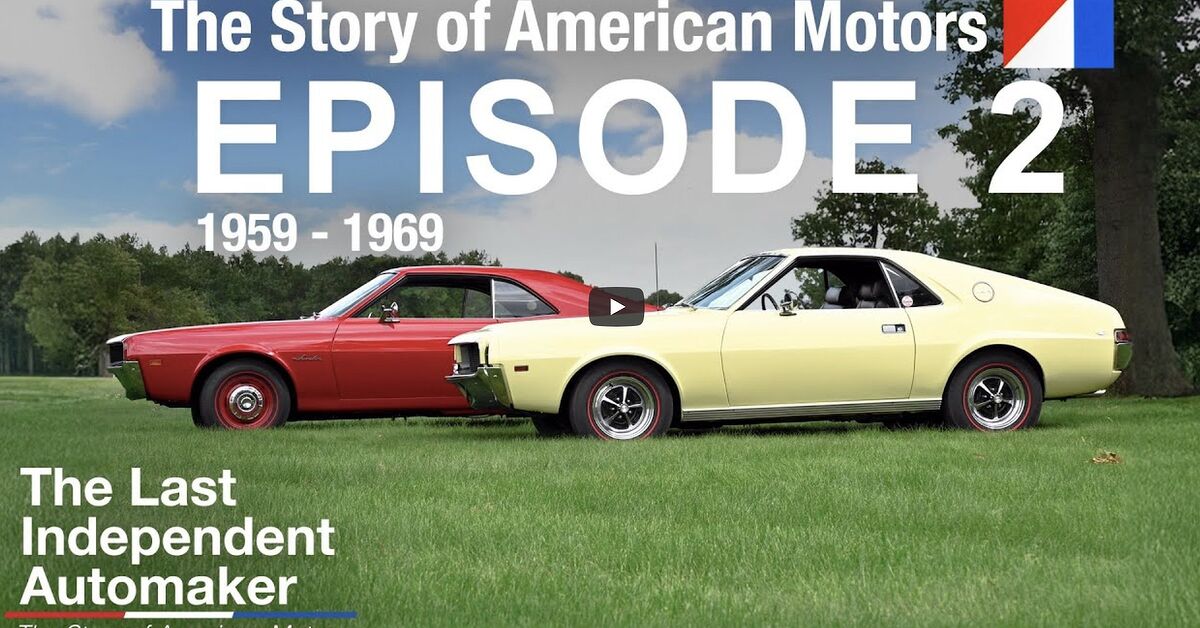
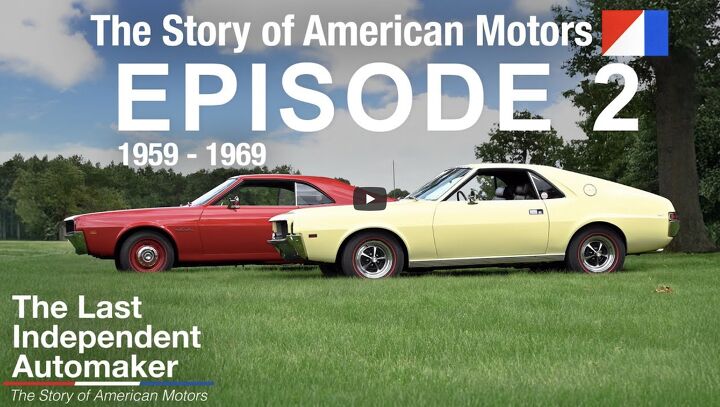
The latest installment of the documentary series The Last Independent Automaker, produced by Joe Ligo, Jimm Needle, and Patrick Foster, chronicles this pivotal era. Through over 35 exclusive interviews and a treasure trove of archival footage, the series paints a vivid portrait of a company desperately trying to reinvent its identity from a purveyor of sensible compacts to a manufacturer of high-performance muscle cars.
The Romney Era: Building a Foundation on Compacts
To understand the crisis of the 1960s, one must first appreciate the architecture of the 1950s. Under the charismatic and disciplined leadership of George Romney, AMC had pulled off a miracle. By championing the Rambler and focusing on the "compact car" market when the rest of Detroit was obsessed with oversized chrome behemoths, Romney turned AMC into a profitable, albeit niche, powerhouse.
Romney’s strategy was built on a foundation of efficiency. He famously branded the Big Three as "dinosaurs" and marketed the Rambler as a sensible, intelligent choice for the modern family. By the late 1950s, this approach had paid off, with the company achieving record sales and establishing a loyal customer base. Yet, success brought its own set of challenges. As the economy flourished, consumer tastes shifted. The "sensible" car, once a badge of economic pragmatism, began to feel like a limitation in the eyes of a generation coming of age in a time of unprecedented prosperity.
Chronology of a Corporate Identity Crisis
The Early 1960s: The Shift in Consumer Sentiment
As the calendar turned to 1960, the market began to demand more than just fuel economy. The Baby Boomer generation, now entering their driving years, looked at their parents’ Ramblers and saw boredom. They wanted style, speed, and the visceral thrill of V8 power. AMC, tethered to its identity as the "economy car" company, found itself struggling to pivot.
1962–1964: Leadership Transition and Strategic Friction
The departure of George Romney, who left to pursue a career in politics, left a massive vacuum at the top of AMC. His successor, Roy Abernathy, inherited a company that was financially stable but strategically stagnant. Abernathy attempted to broaden the company’s appeal by moving the brand upmarket, trying to compete directly with mid-sized offerings from the Big Three. This proved to be a disastrous miscalculation. By attempting to out-muscle Ford and GM, AMC diluted its core value proposition without successfully capturing the youth demographic.
1964–1967: The Mustang Catalyst
The introduction of the Ford Mustang in 1964 changed everything. It created the "pony car" segment almost overnight, making AMC’s existing product line look positively archaic. AMC’s internal debates intensified: should they chase the youth market with a performance-oriented halo car, or stick to the economy roots that had kept them alive? The resulting identity crisis saw sales decline precipitously, leading to boardroom turmoil and the eventual ousting of Abernathy.
1967–1970: The Last Stand with Javelin and AMX
Under the leadership of Roy Chapin Jr., the company made a final, bold push for relevance. The launch of the Javelin and the two-seat AMX was an attempt to prove that AMC could play in the muscle car arena. While these vehicles were critically acclaimed and technically impressive, the window of opportunity was closing. The company was perennially underfunded compared to its rivals, and the marketing spend required to shift the public perception of the brand was astronomical.
The Engineering and Manufacturing Dilemma
Beyond the marketing struggles, AMC faced immense structural challenges. Producing competitive muscle cars requires a robust engine program and significant R&D budget—resources that the Big Three possessed in abundance. AMC was often forced to rely on clever engineering to mask its lack of capital.
Their approach to labor relations was equally unique. AMC pioneered a profit-sharing model that was ahead of its time, fostering a deep, almost familial loyalty among its workforce. While this created a stable manufacturing environment, it did not solve the fundamental issue of scale. Without the massive volume of a GM or Ford, the per-unit cost of AMC’s innovative features was consistently higher, putting them at a permanent disadvantage in price-sensitive segments.
Implications of the "Independent" Status
The struggle of AMC serves as a case study in the risks of the automotive industry. As a "last independent," AMC lacked the vertical integration and massive dealer networks of its competitors. Every design choice, every engine upgrade, and every marketing campaign was a high-stakes gamble.
The documentary series highlights a tragic irony: in their attempt to beat the Big Three at their own game, AMC often lost the very qualities that made them special. When they leaned into performance, they lost the "economy-first" buyers who had provided their stability. When they leaned into luxury, they were priced out of the market by manufacturers with better economies of scale.
The Human Element: Interviews and Archival Truths
What sets The Last Independent Automaker apart is its reliance on the human story. By interviewing the engineers, designers, and executives who were in the room when these decisions were made, the series moves beyond the sales charts and into the mindset of the decision-makers.
The footage reveals a culture of intense creativity. Because they were constantly underdogs, AMC’s designers were often forced to be more imaginative than their counterparts at the Big Three. This resulted in cars like the AMX, which remains a cult classic today, precisely because it was born out of such a desperate, singular vision to prove the company’s mettle on the drag strip.
Looking Ahead: The Gremlin and Beyond
The current episode of the documentary concludes at the dawn of a new era. As the late 60s bled into the early 70s, AMC’s future seemed increasingly precarious. The upcoming introduction of the Gremlin—an attempt to reconcile the company’s compact-car heritage with the styling trends of the 1970s—represents the next chapter in this gripping saga.
For enthusiasts, the story of AMC is not merely one of failure, but of resilience. It is a story of how a relatively small group of people, operating with limited resources, managed to challenge the status quo for decades. The documentary reminds us that the "truth about cars" is not found in the sales numbers alone, but in the passion, the engineering ingenuity, and the sheer audacity of those who dared to compete in the most competitive industry on earth.
The Last Independent Automaker is currently available for viewing. For more information on the series and deeper dives into the history of American Motors Corporation, follow the TTAC Creators Series.
About the Author:
Joe Ligo is an Emmy Award-winning TV producer and the director of The Last Independent Automaker. He is a passionate automotive historian and the owner of a 1972 AMC Ambassador Brougham, a testament to his dedication to preserving the legacy of this iconic manufacturer.