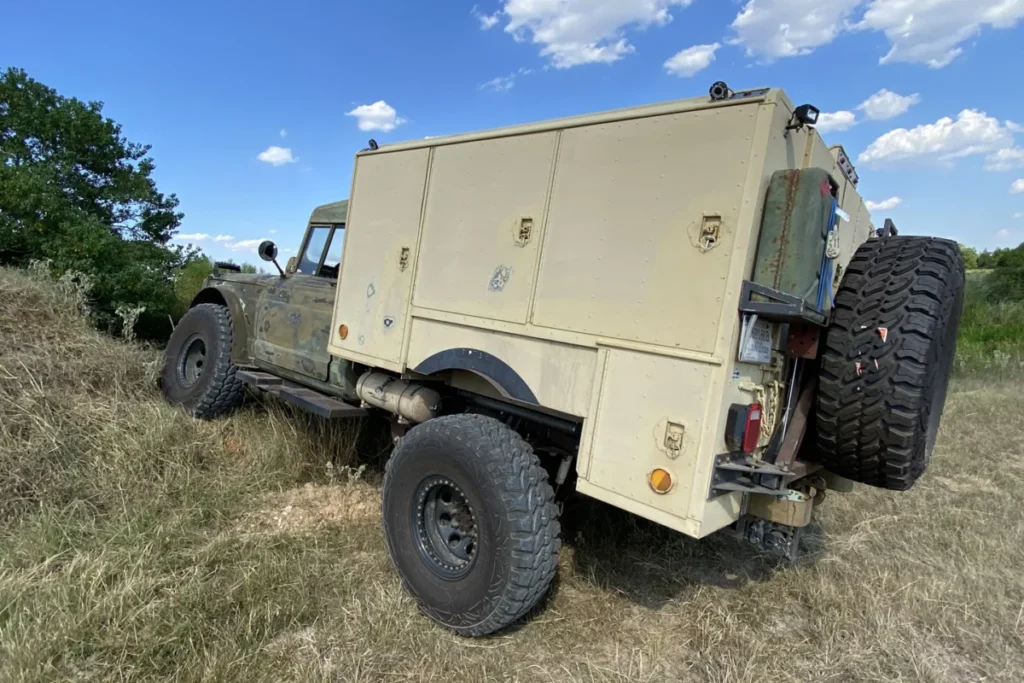

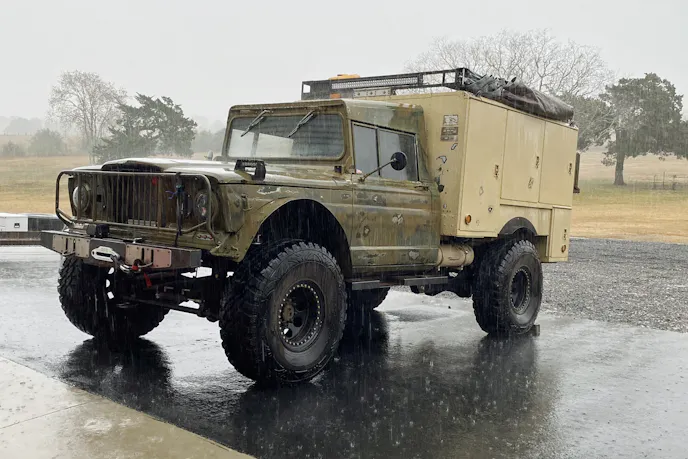
For many enthusiasts, the allure of military surplus vehicles lies in their raw, unadulterated capability. However, BJ Kohlleppel—a seasoned veteran of the military truck scene—saw beyond the stock limitations of the iconic 1967 Kaiser Jeep M715. Having previously owned a stable of M35A2 6x6s, M998 Humvees, and M1028 CUCVs, Kohlleppel possessed the mechanical pedigree to take a non-running, neglected chassis and transform it into a pinnacle of overlanding engineering.
The resulting vehicle is a masterclass in modularity, combining the rugged aesthetic of a Cold War-era tactical truck with the creature comforts of a modern expedition camper and the raw towing capacity of a heavy-duty hauler.
The Chronology of a Restoration
The journey for this specific M715 began in 2012 when Kohlleppel acquired the vehicle in a non-running state. What followed was a near-decade odyssey of meticulous planning, sourcing, and fabrication. While the truck existed in various stages of repair for years, the primary overhaul that defined its current form took place in 2021.
The process was not a linear path but a series of calculated upgrades. Kohlleppel’s philosophy was to maintain the vehicle’s military soul while replacing its outdated and unreliable drivetrain components with modern, serviceable, and high-performance alternatives. The 14-month intense build phase in 2021 was merely the tipping point of a project that continues to evolve today as he refines the rig for real-world performance.
Main Facts: The Drivetrain Architecture
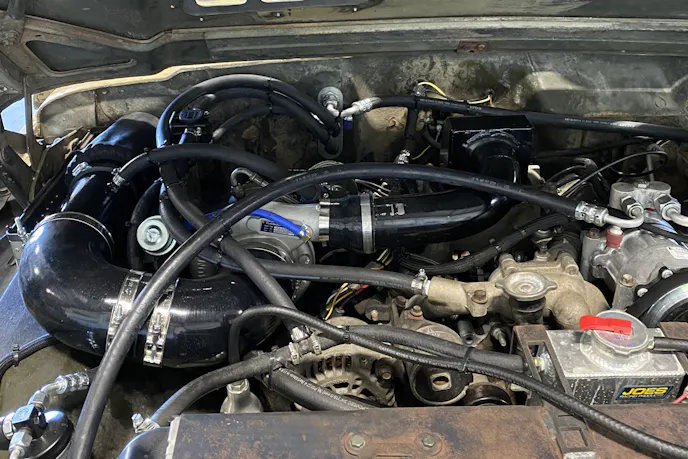
At the heart of the M715 lies a controversial yet remarkably effective power plant. Kohlleppel opted for the "Optimizer 6500" 6.5-liter V8 diesel, a project engine he masterminded by cannibalizing parts from three separate units. One of these donor engines was salvaged from a friend’s Humvee, which had been converted to a modern 5.3-liter gasoline configuration.
To ensure this classic diesel could keep pace with modern traffic and heavy towing demands, significant modifications were required:
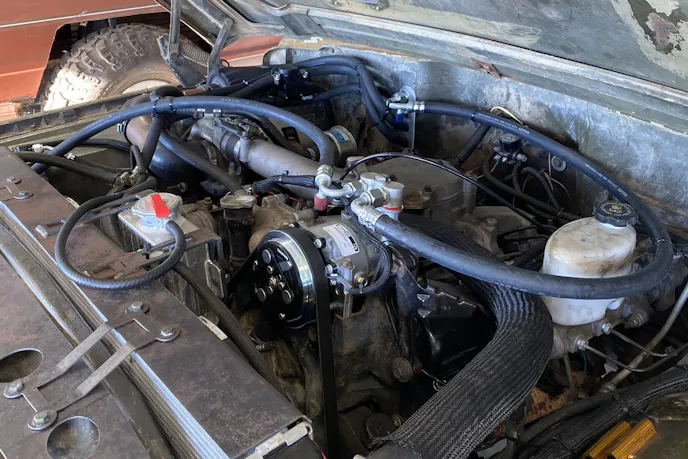
- Forced Induction: An HX40 turbocharger provides the necessary airflow to wake up the engine.
- Fuel Management: The inclusion of a DB2-4911 injection pump ensures precise fuel delivery.
- Thermal Management: To combat the heat associated with heavy-duty diesel operation, Kohlleppel integrated an LB7 Duramax-application radiator, twin 16-inch Spal brushless fans, and a Derale remote oil cooler complete with its own dedicated fan.
While some critics in the off-road community frequently disparage the "gutless" nature of older GM diesels, Kohlleppel stands by his choice. "My engine choice seems to bring out the hate," he admits, yet he notes that his real-world experiences with the platform have been nothing short of exemplary.
The power is transmitted through a robust GM NV4500 five-speed manual transmission, a reliable gearbox chosen for its ability to handle the torque of the diesel engine. The transfer case is a Ford NP205, modified with a GM 32-spline input—a component secured through a strategic trade involving a TH400 automatic transmission.
Supporting Data: Chassis and Suspension Dynamics
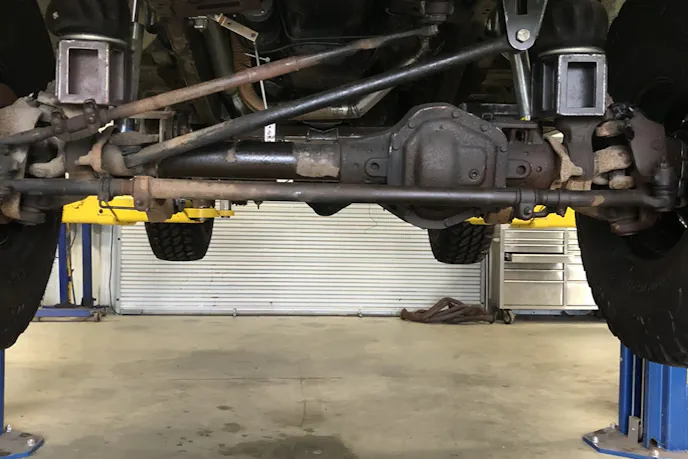
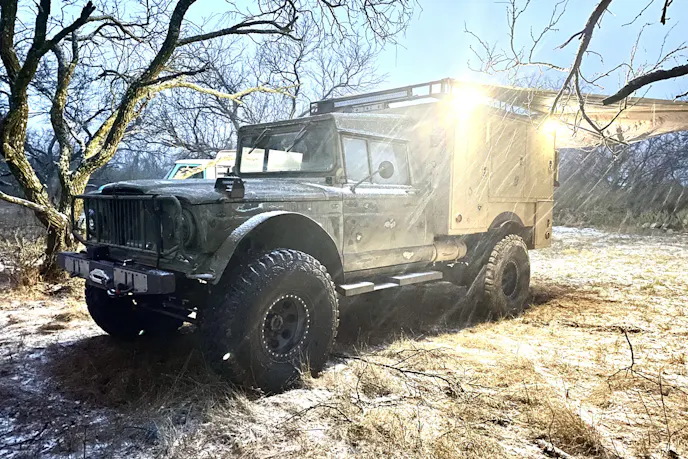
The structural foundation of this build deviates significantly from the stock Kaiser platform. Kohlleppel utilized a 2005 Ford Super Duty donor chassis for the suspension and axle geometry, but the implementation is highly customized.
Axle Configurations
- Front: A 2005 Ford Super Duty Dana 60, featuring manual lockout hubs and a Yukon Gear & Axle Grizzly Locker to ensure maximum traction. Steering is augmented by a Redneck Ram hydro-assist kit, essential for navigating the massive 40-inch tires.
- Rear: A GM 14-bolt axle, sourced from a 2002 Chevrolet 2500 parts truck, equipped with disc brakes and an Eaton Detroit Locker. Both axles are geared at 4.56:1, providing an ideal balance between highway cruising and low-speed torque for crawling.
Suspension Engineering
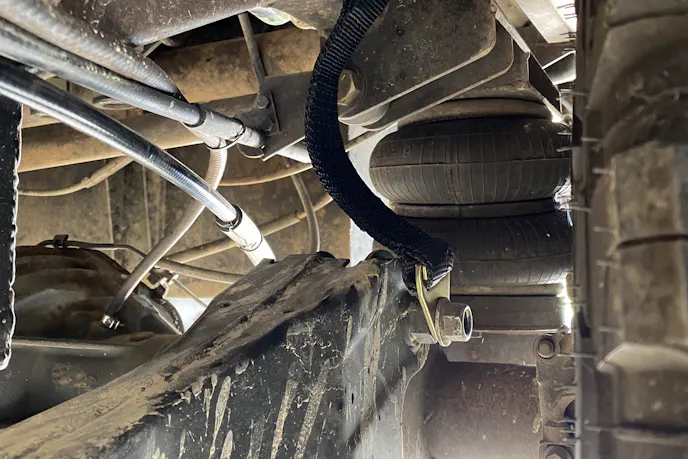
Rather than relying on the traditional leaf springs found on the original M715, this build utilizes a sophisticated air-bag suspension system from ContiTech. This setup allows the driver to adjust the ride height on the fly, a critical feature for both aerodynamic efficiency on the road and obstacle clearance on the trail. Damping is handled by Bilstein 5100 shocks up front and Rancho units in the rear. A custom 1.5-inch diameter, 0.250-inch wall tubing rear track bar ensures lateral stability, preventing the "sway" often associated with lifted, heavy-duty trucks.
The rolling stock consists of 40×13.50R17 Pro Comp XTerrain tires mounted on 8-inch-wide Pro Comp wheels, providing a contact patch large enough to tackle the most demanding terrain.
The CUCV Service Body: A Mobile Living Space
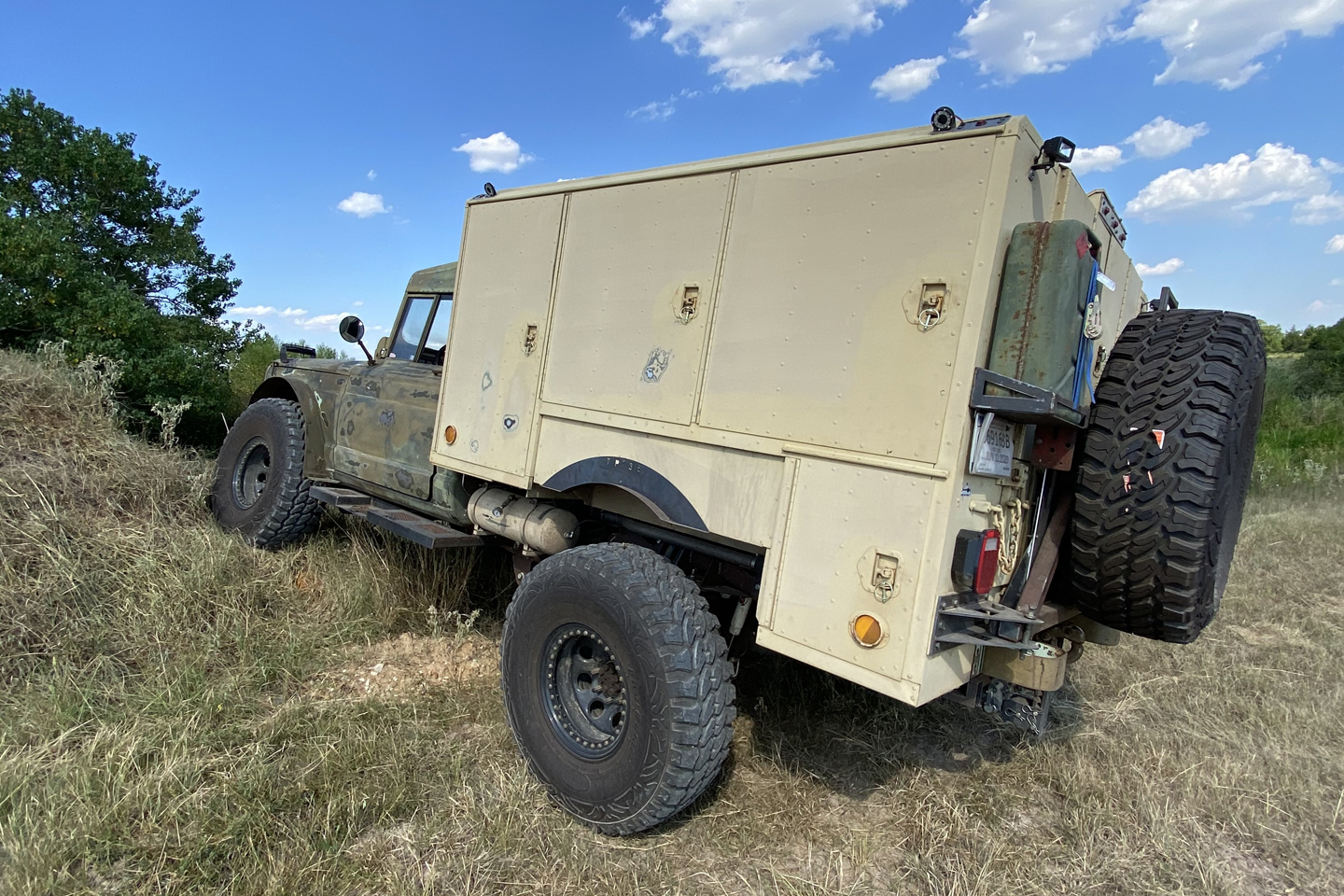
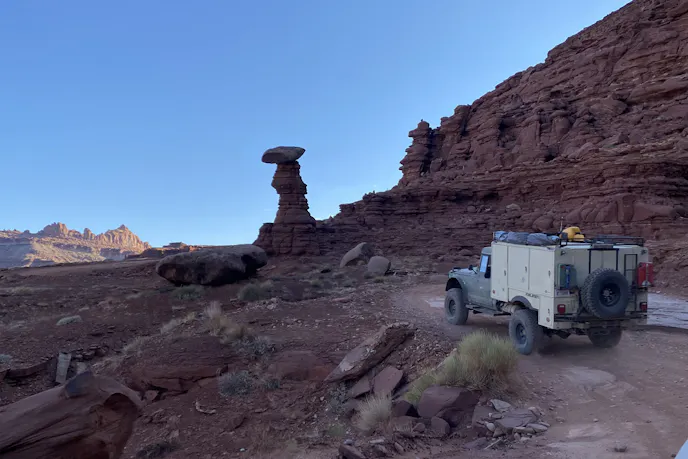
Perhaps the most distinctive feature of the truck is the service bed sourced from a 1980s-era CUCV (Commercial Utility Cargo Vehicle). Kohlleppel has successfully repurposed this industrial tool chest into a "tiny camper," proving that tactical utility can be married to long-distance touring comfort.
The living area is self-contained and equipped for true off-grid independence:
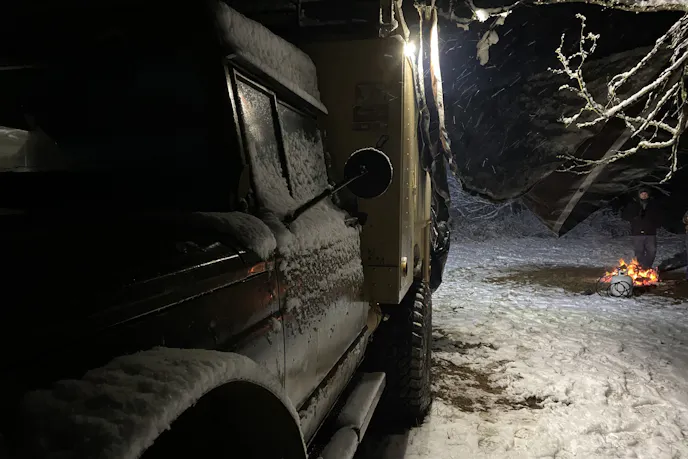
- Climate Control: Includes both a propane heater for cold nights and integrated air conditioning.
- Utilities: A hot water system and shower, a refrigerator, and a gas-powered generator.
- Customization: A handmade bed frame and extensive internal storage solutions maximize the limited square footage.
The exterior of the build is equally well-thought-out, featuring a custom bumper housing a 10,000-pound Smittybilt winch and specialized rocker protection that doubles as steps. The electrical load is supported by a massive 1,200-CCA heavy-equipment battery, ensuring that all lights and auxiliary systems remain powered in remote environments.
Official Perspective and Builder Insights
When asked about the intent behind such an extensive build, Kohlleppel clarifies that this is not a dedicated rock-crawling "buggy" but rather an expedition-grade tool. "This truck was built more for travel, camping, and lighter off-road use," he explains. "I also use it to tow my rock crawler quite a bit."
His secondary rig—a 1984 Toyota-based rock crawler powered by a propane-fired 22R engine—highlights his commitment to the hobby. The M715 serves as the "mothership," hauling his specialized equipment to various off-road meccas, including Hot Springs Off-Road Park, Wolf Caves, and Katemcy Rocks.
Implications: The Future of Military Restomods
The Kohlleppel M715 represents a growing trend in the automotive world: the "Restomod Expedition." As modern vehicles become increasingly reliant on complex electronic sensors and unserviceable drive-by-wire systems, enthusiasts are turning to older, mechanical platforms that can be repaired in the field with basic tools.
The implication here is clear—by blending the high-strength steel of a 1967 military chassis with the reliability of modern lockers, fuel injection, and air-ride suspension, owners are creating vehicles that are effectively "forever trucks." These builds are not just museum pieces; they are functional assets that can survive for decades if maintained properly.
Kohlleppel’s build demonstrates that the barrier to entry for overlanding isn’t a six-figure check for a factory-built rig, but rather the ingenuity to combine the right parts to serve a specific mission profile. Whether it is pulling a trailer through mountain passes or navigating the tight, technical trails of Texas, the M715 stands as a testament to the idea that with enough persistence, any machine can be brought back to life—and made better than the day it left the factory.
As Kohlleppel continues to tweak and refine his creation, he serves as an inspiration to the community. He reminds us that the project is never truly finished; it is simply a continuous process of improvement, designed to keep the spirit of adventure alive on four wheels. If you are ever at a major off-road event in the Southwest, keep your eyes peeled for this unique piece of American history—it’s the one hauling the competition while looking like it could survive an apocalypse.