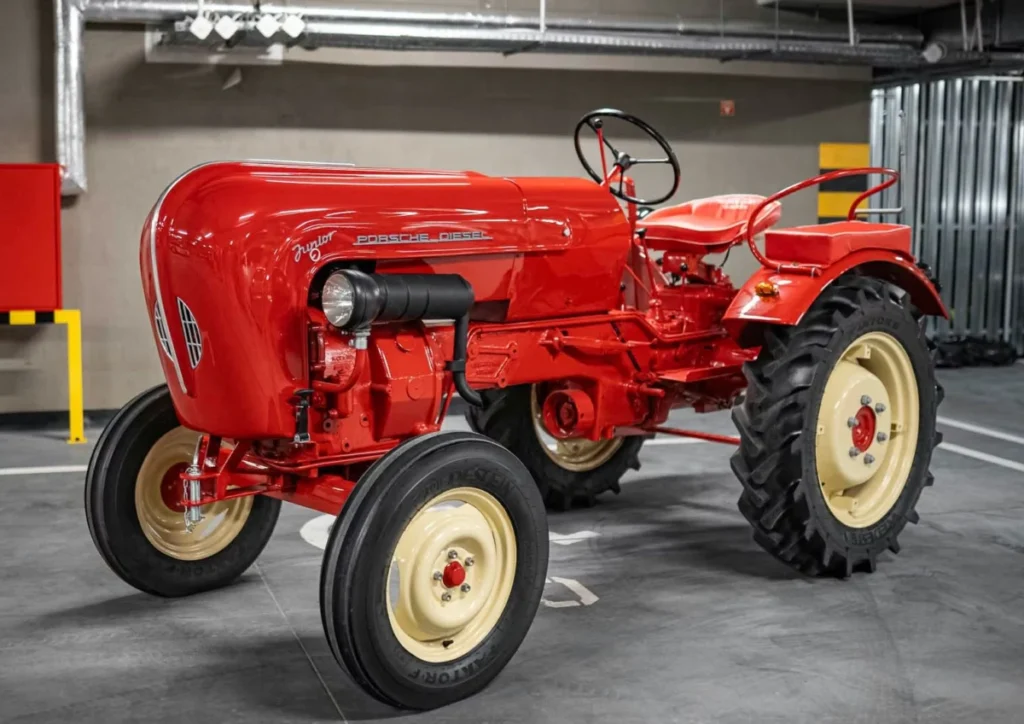

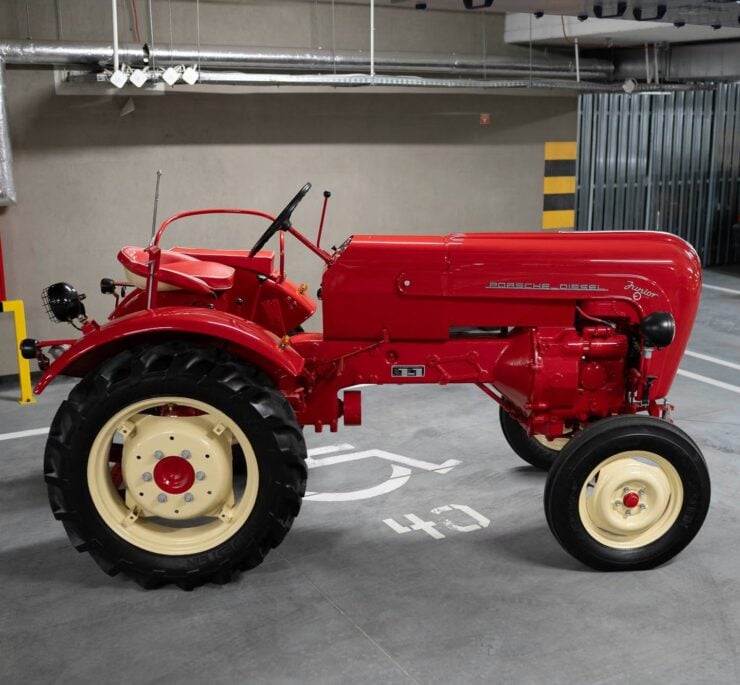
In the pantheon of automotive engineering, the name Porsche is inextricably linked to the flat-six engines, aerodynamic silhouettes, and racetrack dominance of the 911. Yet, for the true enthusiast, the marque’s history is incomplete without acknowledging its humble agricultural roots. Among the most cherished relics of this era is the 1961 Porsche-Diesel Junior 108—a machine that represents the confluence of post-war necessity and high-end German engineering. Currently, a pristine, nut-and-bolt restored example of this iconic tractor has surfaced for auction in Gdynia, Poland, offering a rare opportunity to own a piece of Stuttgart’s industrial heritage.
The Genesis of the "Volksschlepper"
Long before Ferdinand Porsche was refining the sports cars that would define 20th-century performance, his design office was tasked with solving the logistical challenges of a rebuilding Germany. The narrative of the "people’s car"—the Volkswagen Beetle—is well-trodden, but it was paralleled by a project of equal strategic importance: the Volksschlepper, or "people’s tractor."
In the 1930s, as the German government sought to modernize the agricultural sector, the requirement for an affordable, mass-produced tractor became a national priority. Ferdinand Porsche, whose expertise in heavy-duty machinery dated back to his work on artillery tractors during the First World War, was the natural choice for the commission. In 1937, the German Labour Front formally tasked the Porsche design office with the project. Under the guidance of chief engineer Karl Rabe, the team developed the Type 110, a compact, air-cooled, V-twin-powered prototype that aimed to provide small-scale farmers with the same mechanical reliability that the Beetle promised the average commuter.
A Legacy of Innovation: The Hydraulic Coupling
A defining feature of the Porsche tractor line—and one that set it apart from its competitors—was the incorporation of a fluid-based hydraulic coupling between the engine and the transmission. This design choice was born out of a pragmatic, if slightly cynical, observation of the era’s labor force. Engineers believed that the average farmer, often transitioning from the use of horses and draft animals, lacked the finesse required to operate a traditional mechanical clutch without causing premature wear. By utilizing a hydraulic coupling, Porsche effectively "clutch-proofed" the machine, ensuring longevity even in the hands of novices. This technical foresight became a hallmark of the brand, cementing its reputation for rugged reliability.
Chronology: From Prototypes to Industrial Icons
The timeline of the Porsche-Diesel tractor is a fascinating study of post-war survival and corporate evolution.
- 1938: The first Porsche Type 110 prototype is completed, signaling a shift in focus toward mechanized farming.
- 1945–1949: The conclusion of the Second World War halts independent development. Allied regulations restricted production to companies that had pre-existing tractor manufacturing licenses, forcing Porsche to pivot to a licensing model.
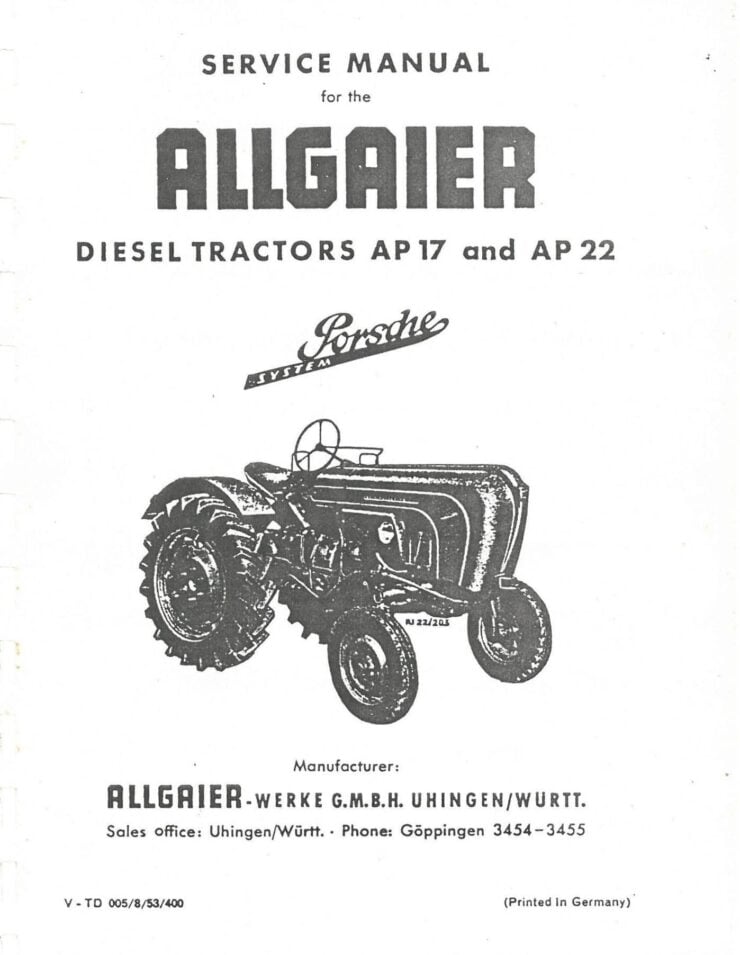
- 1950: The debut of the Allgaier-System Porsche tractors at the Frankfurt Agricultural Exhibition. The AP 17, utilizing Porsche’s air-cooled diesel technology, becomes an instant commercial success, securing over 15,000 orders in three days.
- 1956: The industrial giant Mannesmann AG acquires the tractor and engine licenses, establishing Porsche-Diesel Motorenbau GmbH. Production moves to the historic Zeppelin factory in Friedrichshafen-Manzell.
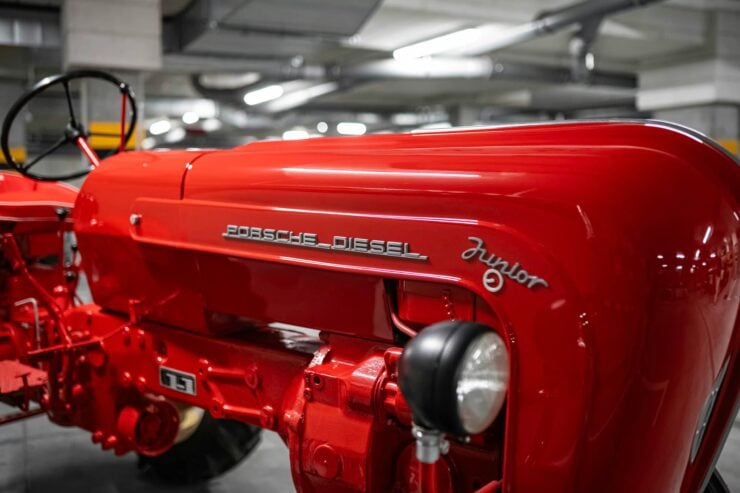
- 1956–1963: The "Red Nose" era. The tractors are repainted in their iconic bright red livery. The line expands to include the Junior, Standard, Super, and Master models.
- 1963: Production ceases as the market shifts and the Friedrichshafen facility is repurposed for the manufacturing of heavy-duty military engine components for MTU-Daimler.
Supporting Data: The Anatomy of the Junior 108
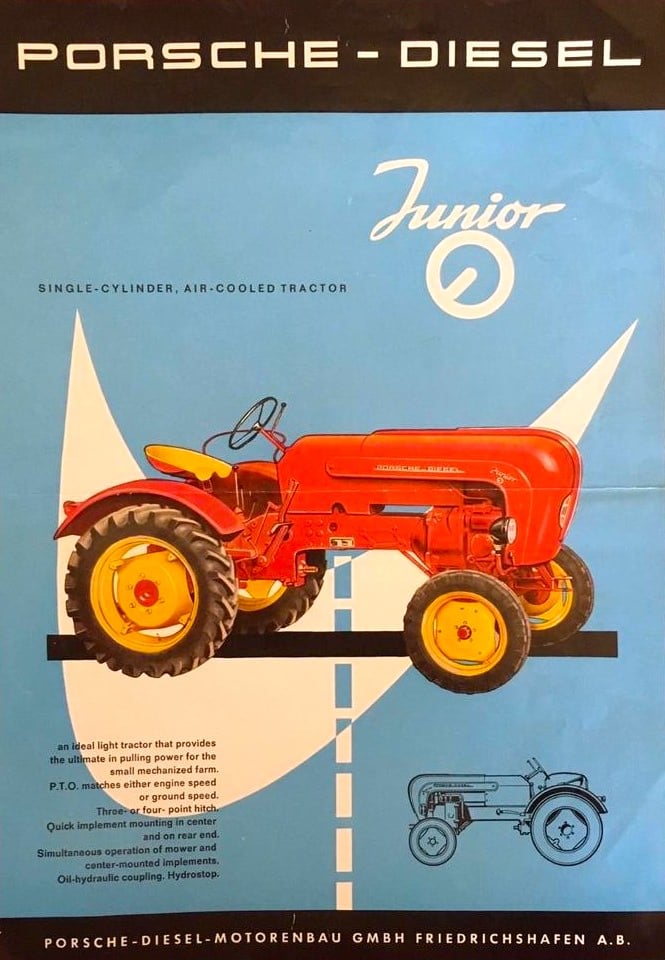
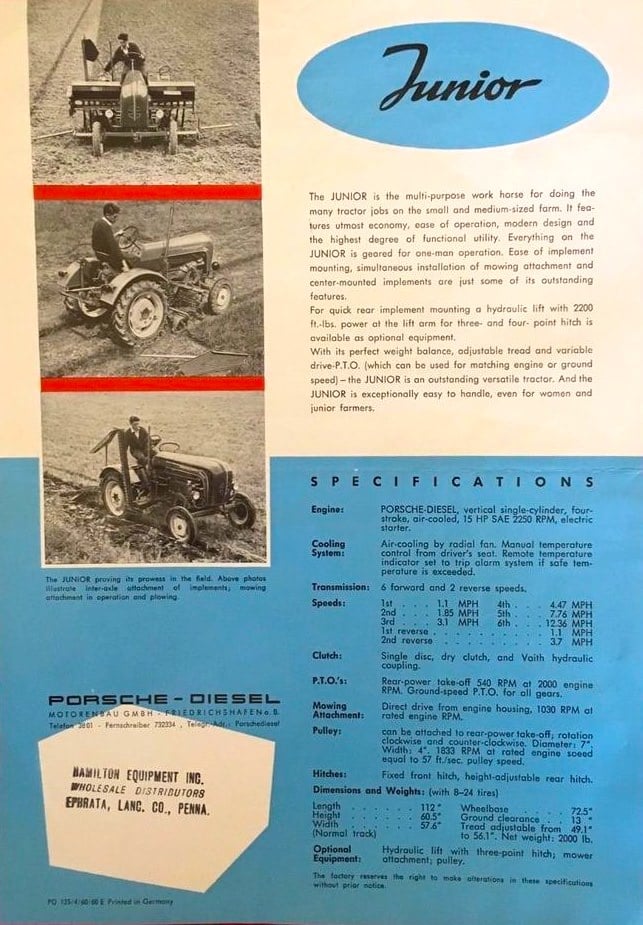
The Junior 108 stands as the most approachable entry point into the Porsche-Diesel world. It was designed for efficiency and ease of maintenance, featuring a modular engine design where each cylinder could be serviced or removed individually.
Technical Specifications
- Engine: 882cc naturally aspirated, air-cooled, single-cylinder diesel.
- Output: 14 bhp (upgraded to 15 bhp in later 1959+ models).
- Transmission: 3-speed manual with a dual-range transfer case, providing six forward and two reverse gears.
- Dimensions: Specifically configured for utility, with narrow-tread variants (the 108S) capable of navigating rows as tight as 66 cm.
- Production Volume: Between 120,000 and 125,000 units across the entire series, with the Junior being the volume leader.
Despite its modest horsepower, the Junior 108 is a masterclass in torque delivery. Its low-geared creep ratios allowed it to perform delicate field tasks that required high precision and slow movement, effectively doing the work of a team of draft horses with significantly lower operational overhead.
Market Positioning and Collector Status
Historically, these tractors were positioned as premium, albeit accessible, agricultural tools. In the United States, the Junior 108 retailed for approximately $1,750, whereas the flagship three-cylinder "Super" models commanded double that price. Today, the dynamic has shifted. While they remain significantly more affordable than the air-cooled Porsche sports cars of the 1960s, the "Red Nose" tractors have evolved into highly sought-after collector items.
Their presence at major auction houses—including RM Sotheby’s and Bonhams—has become a common sight. Furthermore, the brand’s cult following is so robust that the Porsche Club of America has even sanctioned dedicated racing classes for these machines at the prestigious Rennsport Reunion, where they tackle the legendary curves of Laguna Seca with surprising tenacity.
The 1961 Exemplar: A Restoration Masterpiece
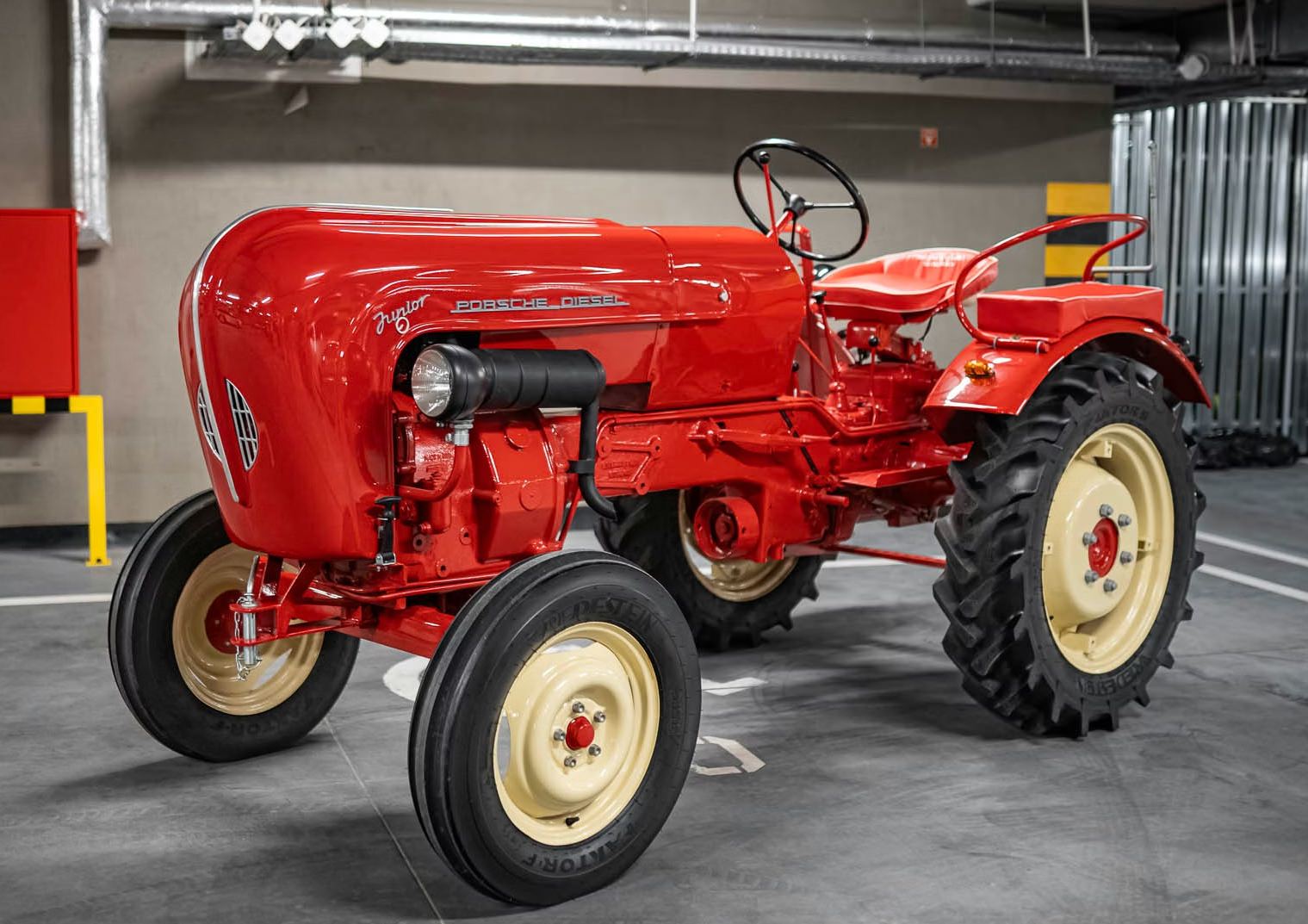
The specific unit now on offer from a private collection in Gdynia, Poland, serves as a testament to the enduring appeal of the 108. This particular tractor has undergone an exhaustive, "nut-and-bolt" restoration, returning it to the exact specifications it would have possessed when it left the Friedrichshafen-Manzell factory in 1961.
Restoration Highlights:
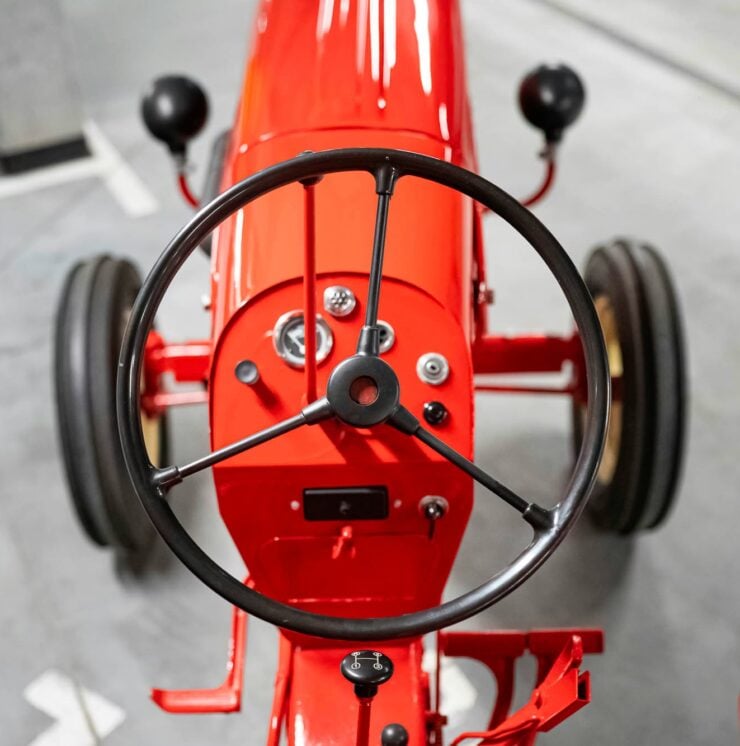
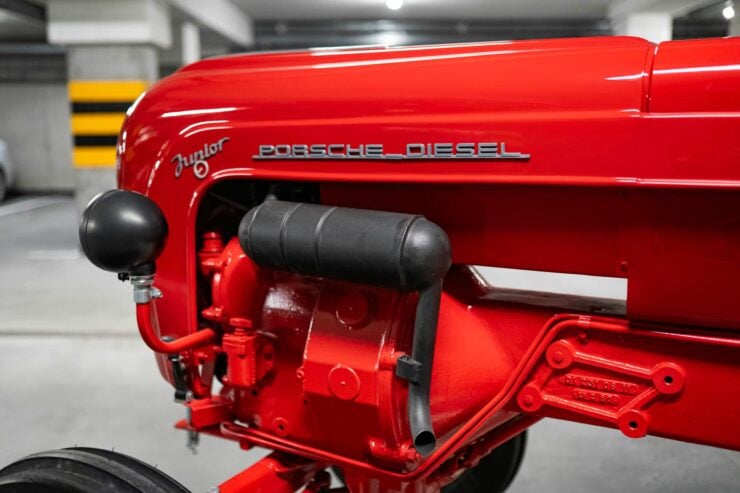
- Cosmetic Integrity: The iconic red livery and cream-finished steel wheels have been professionally refinished.
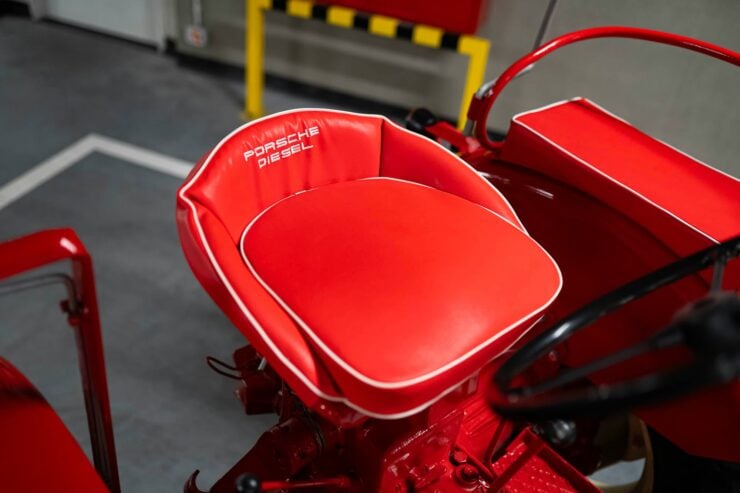
- Interior/Operator Interface: The seat has been retrimmed in red vinyl with white piping and branded "Porsche Diesel" embroidery, matching the historical aesthetic while providing modern comfort.
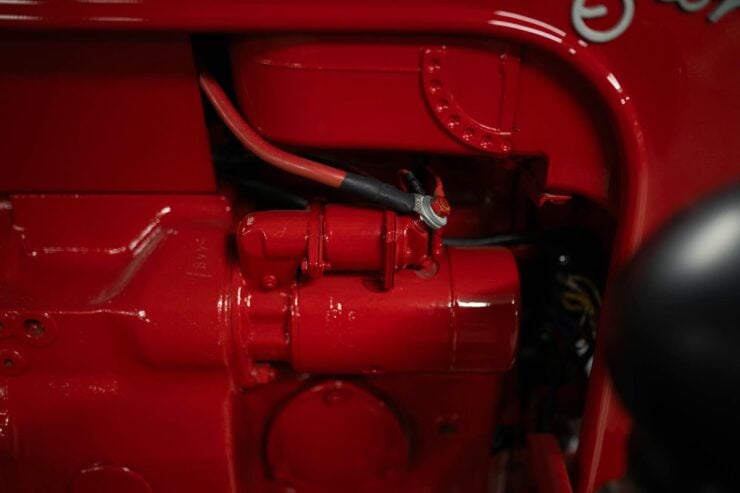
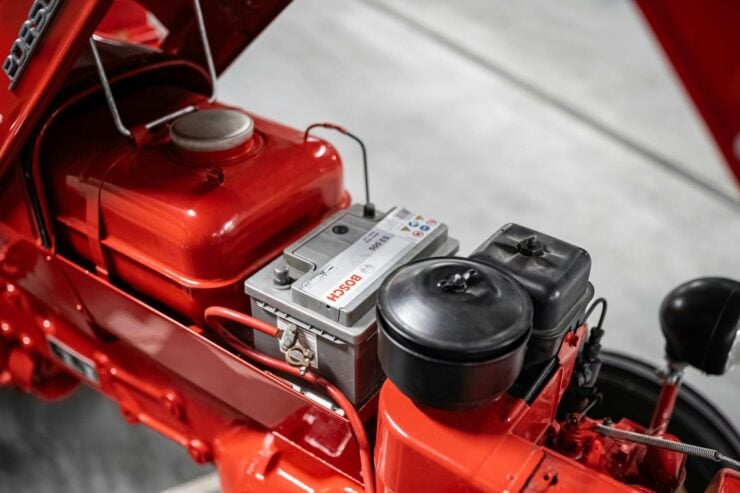
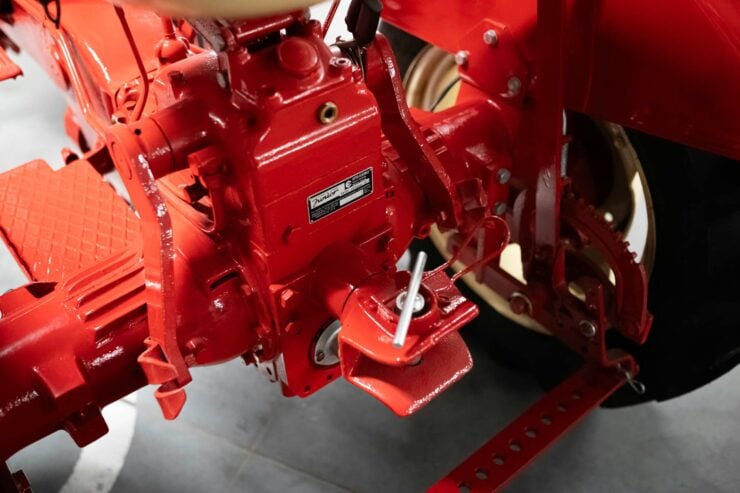
- Mechanical Status: The 882cc engine has been fully refreshed, with the most recent maintenance conducted in April 2026. The vehicle has remained in a private collection since the restoration, ensuring the engine hours remain minimal.
- Equipment: The tractor features the original stalk-mounted headlights and the signature rear-fender side seat, complete with the period-correct protective grille for the work light.
Implications for the Collector
For the modern collector, the 1961 Porsche-Diesel Junior 108 represents more than just a piece of farm equipment; it is a vital chapter in the biography of Ferdinand Porsche. It highlights the company’s commitment to durability and user-centric design that transcends the asphalt of the Nürburgring.
Acquiring such a piece offers a unique set of benefits:
- Historical Significance: Owning a vehicle that bridges the gap between the Beetle and the 911.
- Ease of Ownership: Unlike a complex 1960s sports car, the Junior 108 is mechanically straightforward. Its air-cooled, single-cylinder diesel is a marvel of simplicity, making it an excellent "entry-level" classic for those who enjoy hands-on maintenance.
- Investment Potential: As interest in vintage agricultural machinery continues to rise, and with the Porsche badge carrying significant weight in the collector world, these tractors represent a stable, tangible asset.
Conclusion
The 1961 Porsche-Diesel Junior 108 is a reminder that greatness often starts in the field. It is a machine that demands respect—not for its top speed or cornering ability, but for its role in the industrial recovery of Europe and its reflection of the engineering philosophy that would eventually create the world’s most recognizable sports cars. As this fully restored example goes under the hammer, it offers a rare, tactile connection to a bygone era, proving that even a "people’s tractor" can possess the soul of a Porsche. Those interested in adding this piece of history to their stable can view the full listing and documentation through the Collecting Cars platform.