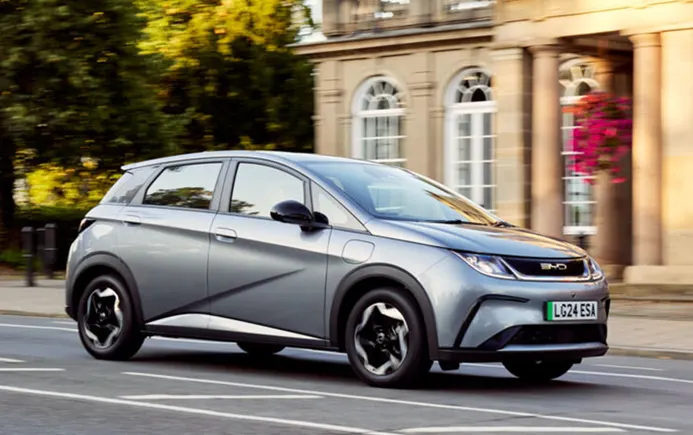

The United Kingdom’s automotive sector is currently navigating a complex period of transformation, characterized by a notable rebound in vehicle registrations contrasted against the sobering reality of the government’s ambitious decarbonization targets. According to the latest data from the Society of Motor Manufacturers and Traders (SMMT), the U.K. car market recorded 149,247 new vehicle registrations in April 2026, marking a significant 24% year-on-year increase. While this figure offers a glimmer of optimism for a sector emerging from economic volatility, it masks deep-seated challenges regarding the adoption of electric vehicles (EVs) and the long-term feasibility of the U.K.’s Zero Emission Vehicle (ZEV) mandate.
The State of the Market: A Statistical Overview
The April surge, while impressive, must be contextualized within the broader economic climate of the previous year. The SMMT has cautioned that the double-digit growth is partially a reflection of a base-effect anomaly; April 2025 was an uncharacteristically weak month, as consumers had aggressively pulled forward their vehicle purchases into March to circumvent impending tax adjustments.
Despite this, the data reveals a nuanced shift in consumer behavior. Electric vehicle registrations saw a robust 59.1% growth compared to the same period last year, capturing a 26.2% market share for the month. When aggregated, electrified vehicles—a category encompassing battery-electric, plug-in hybrid (PHEV), and hybrid-electric (HEV) models—accounted for 53.2% of the total market, signaling that the U.K. is firmly in the era of electrification. Specifically, PHEV registrations climbed 46.4%, capturing 13.8% of the market, while HEVs rose by 18.8%, securing a 13.2% share.
Conversely, the traditional internal combustion engine (ICE) market saw an 8.2% rise in demand, while diesel registrations continued their long-term decline, dropping by 1%. These figures highlight a market that is not simply pivoting toward a single solution but is instead diversifying its energy intake while struggling to achieve the velocity required by statutory mandates.
Chronology of the Transition
The current automotive landscape in the U.K. is the culmination of years of policy shifts and global economic shocks. The following timeline tracks the progression of these trends:
- Pre-2025: The U.K. government establishes the ZEV mandate, setting aggressive yearly targets for manufacturers to shift their sales portfolios toward electric powertrains.
- Early 2025: Significant tax changes are introduced, triggering a "pull-forward" effect where consumers rushed to purchase vehicles before new fiscal measures took hold, leading to a suppressed market in April 2025.
- Late 2025: Global energy costs rise, and supply chain disruptions persist, dampening the enthusiasm of both manufacturers and retail consumers regarding the rapid transition to EVs.
- Q1 2026: The industry experiences a slower-than-anticipated start to the year, prompting analysts to downgrade expectations for EV market penetration.
- April 2026: A rebound in overall registrations occurs, though the SMMT notes that the "natural demand" for EVs remains significantly behind the curve set by regulators.
The ZEV Mandate: A Growing Policy Gap
Perhaps the most pressing concern for the automotive industry is the widening chasm between the government’s Zero Emission Vehicle Mandate and real-world market performance. The U.K. government’s mandate requires that a specific percentage of new car sales be zero-emission each year to reach the 2035 target of ending the sale of new petrol and diesel cars.
For 2026, the mandate requires a substantial 33% market share for EVs. However, despite billions of pounds in manufacturer-led discounts and the implementation of government-backed electric car grants, the actual year-to-date market share for EVs sits at just 23.1%. The SMMT’s latest outlook for 2026 has officially downgraded the expected EV market share from an earlier projection of 28.5% down to 26.8%.
Looking further into the future, the industry anticipates the 2027 market will reach 2.12 million units, with EVs projected to capture 32% of that total. Even with this projected growth, a persistent gap of roughly six percentage points remains against the government’s mandate for that year. Industry experts argue that this failure to meet targets is not due to a lack of investment or marketing, but rather a misalignment between policy and current consumer realities, including high energy costs, expensive charging infrastructure, and the inflationary pressure on vehicle manufacturing costs.
Official Responses and Industry Sentiment
The SMMT, acting as the voice of the British automotive sector, has been vocal about the precarious nature of the current transition. Mike Hawes, Chief Executive of the SMMT, welcomed the rebound but issued a stark warning regarding the structural health of the market.
"April’s rebound is welcome but underlines just how significantly fiscal changes can influence the market," Hawes stated. "Two million electric car registrations is a considerable milestone to celebrate, although natural demand is still well below the level demanded by the mandate."
Hawes emphasized that the mounting "cost of compliance" threatens more than just the bottom lines of automakers; it jeopardizes consumer choice, the speed of decarbonization, and the overall competitiveness of the U.K. as a manufacturing hub. His call for a "rapid review of the transition to align policy with market realities" serves as a direct challenge to policymakers to reconsider the rigidity of the ZEV mandate in the face of ongoing economic headwinds.
Analyst Perspective: Resilience in a Turbulent Backdrop
Providing an external perspective, Maria Bengtsson, the EY U.K. & Ireland mobility leader, noted that while the figures for April are objectively encouraging, the ability of the market to sustain this momentum remains an open question.
"The jury is out over whether the U.K. can sustain this growth," Bengtsson said in an assessment for WardsAuto. She pointed to a psychological shift in the consumer base, noting that rising fuel prices—partially exacerbated by geopolitical instability, such as the conflict in Iran—have pushed more buyers to consider cleaner alternatives. "Data showing that consumers are more willing to look at EV purchases because of rising fuel prices forced by the conflict in Iran show they are open to ‘cleaner and greener’ transport solutions."
However, Bengtsson warned against complacency. "Despite these green shoots, heightened fuel prices, increased uncertainty, and supply chain disruption may slow momentum in the coming months," she observed. For automakers, the path forward necessitates a high degree of operational dexterity. According to Bengtsson, the priority for the industry must be "resilience, scenario planning, and agility" to ensure that the transition remains on track despite the "turbulent backdrop."
Implications: What Lies Ahead for the U.K. Auto Market?
The implications of the current market data are far-reaching. If the gap between the ZEV mandate and actual sales continues to widen, the U.K. may face a scenario where manufacturers are forced to artificially limit the sale of ICE vehicles to meet quota targets, potentially driving up vehicle prices and reducing choice for the average consumer.
Furthermore, the U.K.’s status as a premier global manufacturing hub is tied to its ability to lead the EV transition. If the domestic market remains sluggish, it could disincentivize foreign investment in local battery production and EV assembly lines. The government now faces a delicate balancing act: maintaining the urgency of its climate goals while providing enough flexibility to ensure that the automotive sector remains profitable and consumer-focused.
As the industry moves into the second half of 2026, all eyes will be on whether the current rebound represents a genuine pivot toward a sustainable electric future or merely a temporary fluctuation in a market struggling to reconcile policy ambition with the constraints of the modern economy. For now, the "green shoots" identified by analysts are fragile, and the industry’s ability to navigate the coming months will depend on a combination of strategic innovation, government policy adjustment, and the resilience of the British consumer.