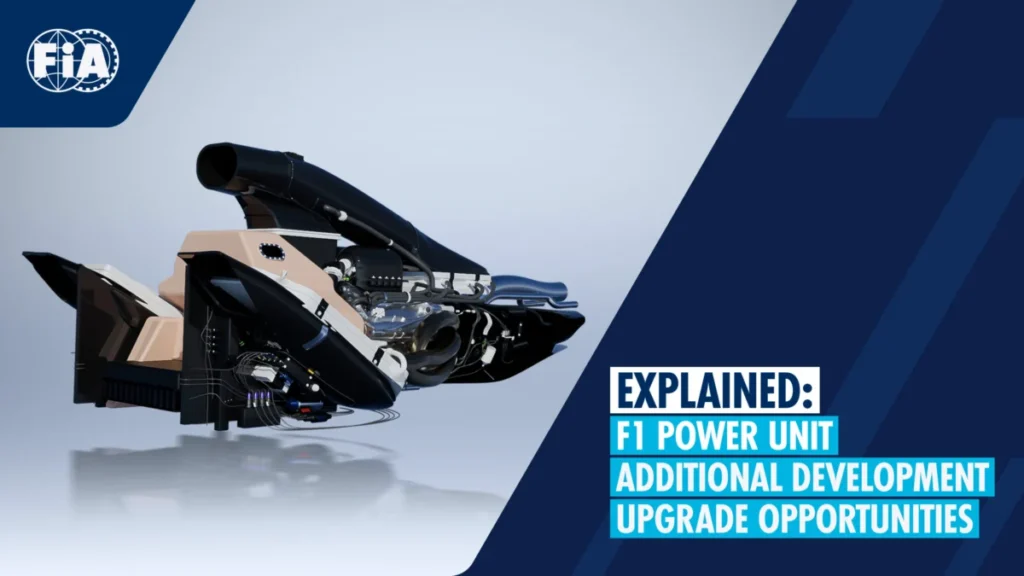

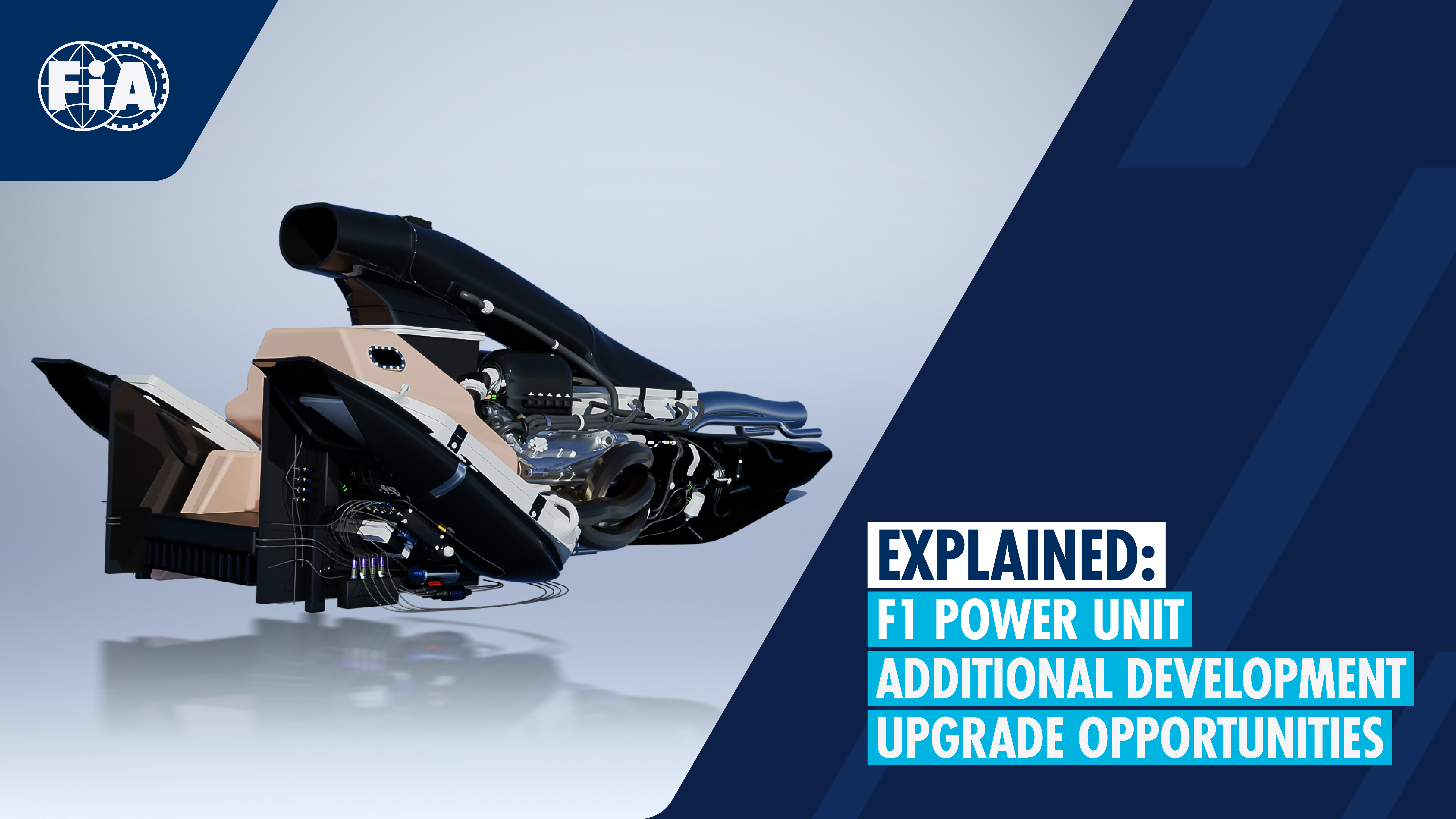
As Formula 1 hurtles toward a new technical era in 2026, the sport is balancing the need for radical innovation with the necessity of close, competitive racing. The FIA has unveiled a sophisticated new regulatory framework known as ADUO (Additional Development and Upgrade Opportunities), a mechanism designed to ensure that manufacturers who fall behind in the performance race are not permanently locked out of contention. By providing targeted financial and developmental leeway, the governing body aims to maintain a grid where the fight for the podium remains fluid and fiercely contested.
The Core Concept: What is ADUO?
At its simplest, ADUO is a regulatory safety net. While Formula 1 power unit (PU) development is typically strictly controlled via homologation—where designs are "frozen" to prevent runaway costs—ADUO allows manufacturers that fall below a specific performance threshold to unlock additional development windows.
It is critical to distinguish ADUO from a "Balance of Performance" (BoP) system. In many other motorsport categories, BoP involves artificially slowing down faster cars or adding weight to parity the field. ADUO operates on a different philosophy: it is a Cost Cap relief mechanism. It does not grant a manufacturer extra fuel flow, more power, or aerodynamic advantages by fiat; rather, it provides the financial breathing room to spend more on research and development, allowing those teams to catch up through superior engineering.
Measuring the Gap: The ICE Performance Index
The FIA will monitor the performance of the Internal Combustion Engine (ICE) of every manufacturer from 2026 through 2030. To maintain transparency, the FIA has established an "ICE Performance Index," which aggregates data points such as:
- Input shaft torque
- Engine speed (RPM)
- MGU-K power output
- Power sensitivity relative to lap time
Crucially, the FIA has decided against applying "correction methodologies." This means that external variables—such as fluid temperatures, ambient track conditions, or the car’s aerodynamic drag profile—are measured as part of the total on-track package. By opting for raw, real-world data, the FIA ensures that the performance index reflects the reality of the car on track rather than an idealized computer model.
However, the FIA acknowledges the system’s limitations. Because ADUO focuses exclusively on the ICE, it does not account for the ERS (Energy Recovery System) or the overall hybrid integration. Consequently, the threshold for triggering ADUO is set at a significant 2% deficit compared to the best-performing ICE. If a manufacturer’s engine output is at least 2% lower than the benchmark, they become eligible for the ADUO program.
Chronology and Monitoring: Adapting to a Shifting Calendar
The 2026 season has been structurally divided into three monitoring periods, designed to provide regular assessments of the competitive landscape. Initially, these were scheduled to align with six-race blocks; however, global logistics and regional challenges have forced an immediate, agile response.
- Period 1 (Races 1–5): Originally intended to include six rounds, this period was truncated to the first five races (Australia, China, Japan, Miami, and Canada) due to regional disruptions. The FIA has committed to communicating the results of this period within two weeks of the Canadian Grand Prix.
- Period 2 (Races 6–11): Covering the European heartland from Monaco to Hungary.
- Period 3 (Races 12–18): Covering the second half of the season, from the Netherlands to Mexico City.
This staggered approach allows the FIA to assess performance trends throughout the season. Importantly, a manufacturer that does not trigger ADUO eligibility during the first two periods of a season loses the chance to claim it during the final period, preventing "sandbagging" or late-season spikes from being exploited to gain an advantage for the following year.
Financial Implications: The Cost Cap Relief Scale
The most tangible aspect of ADUO is the financial allowance granted to manufacturers. According to Article E4.1.1.t of the 2026 Technical Regulations, the funding provided to "catch-up" manufacturers is substantial, scaling with the severity of their performance deficit:
| Performance Deficit | Financial Allowance (Up to) |
|---|---|
| 2% – 4% | USD $3.0m |
| 4% – 6% | USD $4.65m |
| 6% – 8% | USD $6.35m |
| 8% – 10% | USD $8.0m |
| 10% or more | USD $11.0m |
For those in the most extreme bracket—a 10% or greater deficit—the FIA provides an additional lifeline: for the 2026 season only, they may "anticipate" up to $8 million from future cost cap periods. This front-loading of capital is designed to allow teams to invest in critical infrastructure and R&D immediately, rather than waiting for the next financial cycle.
Official Perspectives: Nikolas Tombazis on the Philosophy of Change
Nikolas Tombazis, the FIA Single Seater Director, has been instrumental in clarifying that ADUO is not an attempt to legislate parity for the sake of the show.
"It’s important to make clear that ADUO is not a kind of balance of performance mechanism," Tombazis stated during the launch of the regulations. "A team or manufacturer will not suddenly get greater fuel flow rate or more or less ballast. It is, in fact, a cost cap relief mechanism. A manufacturer will still need to make the best engine in order to win. It’s not a magic bullet, or like the FIA is handing out brownie points to somebody who’s behind; it simply provides them with leeway to develop their power unit within the framework laid out by the Technical Regulations."
This distinction is vital for the sport’s credibility. By focusing on the budget rather than the performance, the FIA is incentivizing efficiency and innovation rather than penalizing success.
Rules of Engagement: How Upgrades Are Managed
The mechanism for implementing upgrades is governed by strict, non-cumulative rules.
- Eligibility Thresholds: A deficit of 2–4% grants one additional upgrade for the current season and one for the following season. A deficit of 4% or more grants two upgrades for the current season and two for the following.
- Use-it-or-lose-it: Upgrades cannot be stockpiled indefinitely. Any upgrade granted for a specific season must be utilized by the final round of that season, or the opportunity is forfeited.
- Cumulative Potential: While ADUO upgrades themselves are not cumulative within a single season, they can stack across seasons. For example, if a manufacturer qualifies for an upgrade in 2026 and again in 2027, they may introduce four distinct upgrade packages during the 2027 campaign.
What Can Be Upgraded?
The scope of the upgrades is comprehensive. While the ICE is the measuring stick, the upgrades permitted are not limited to the combustion chamber. According to Appendix C4, Table 1, manufacturers can refine:
- The turbocharger and wastegate/pop-off assemblies.
- Exhaust systems.
- Electrical components and sensors mounted to the engine or exhaust.
- The MGU-K and associated cooling systems.
- Control Electronics (ECU).
- Hydraulic functions and fluid formulations.
This broad definition of "Power Unit" ensures that if a manufacturer is struggling with, for example, heat dissipation or energy recovery efficiency, they have the regulatory freedom to rectify the issue without being trapped by a rigid homologation schedule.
The Strategic Outlook: Implications for 2026 and Beyond
The introduction of ADUO represents a fundamental shift in how Formula 1 manages its technical regulations. By acknowledging that the high cost of entry and the strictness of the cost cap could theoretically lead to a stagnant grid, the FIA is taking a proactive stance.
For the manufacturers, this creates a fascinating strategic dilemma. Do you push the limits of your design in Year 1, risking a deficit that triggers ADUO? Or do you play a conservative game, focusing on reliability to avoid the need for catch-up spending?
Furthermore, the public nature of the ICE Performance Index will put immense pressure on engineers. There will be no hiding from the data; the FIA will be reporting these figures regularly, and the paddock will be watching closely.
As the 2026 season approaches, the ADUO mechanism stands as a testament to the FIA’s desire for a competitive, sustainable, and technologically relevant sport. It is a nuanced tool for a nuanced problem—a way to ensure that the cutting edge of automotive engineering remains a contest of intellect and resources, rather than a race of who can best navigate the bureaucratic limitations of a closed development cycle. Whether ADUO succeeds in keeping the grid tight will only be known when the lights go out in Australia, but the framework is now firmly in place to prevent any one manufacturer from running away with the championship unchallenged.