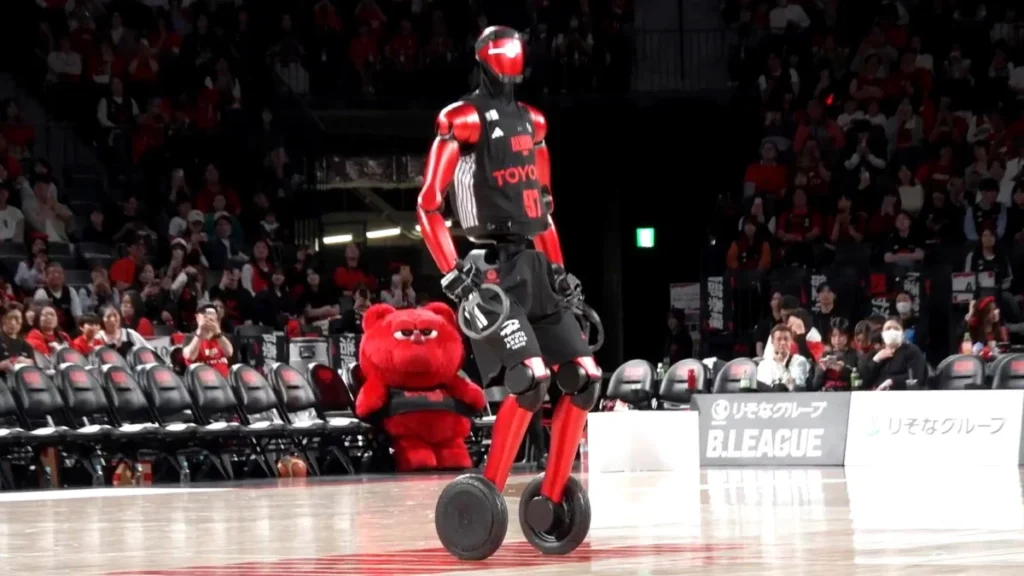

Toyota is a name synonymous with reliability, mass-market automotive engineering, and the lean manufacturing philosophy that transformed global industry. However, the Japanese giant’s history is far more eclectic than the Camry or the Corolla might suggest. Before it was the world’s most prolific automaker, Toyota was a pioneer in textile machinery, specifically automatic looms. Today, the company is bridging its industrial heritage with the cutting edge of the future, pivoting from the assembly line to the basketball court with its latest marvel: the CUE7 robot.
While many tech giants are obsessed with digital intelligence, Toyota has spent the better part of a decade mastering "Physical AI." The debut of the CUE7 at the Toyota Arena in Tokyo, during an Alvark Tokyo home game, served as a stark reminder that when it comes to robotics, Toyota is no longer just playing around—it is playing to win.
The Genesis of a Project: From Engineering Passion to Guinness Records
The CUE project is not a corporate mandate handed down from the boardroom; it is a labor of love. Launched in 2017, the initiative began as a volunteer effort by the Toyota Engineering Society—a group of employees who wanted to explore the frontiers of artificial intelligence and robotics in their spare time.
The objective was clear yet incredibly difficult: to create a humanoid robot capable of mastering the complex, fluid dynamics of basketball. Unlike static industrial robots, a basketball-playing machine must account for varying distances, trajectories, and the physical variables of a spherical object in motion.
A Chronology of CUE’s Ascendancy
- 2017: The CUE Project is founded by volunteer engineers from Toyota’s internal society.
- 2019: The CUE robot achieves global fame, shattering the Guinness World Record for the "most consecutive free throws by a humanoid robot (assisted)." The final tally reached a staggering 2,020 successful shots, proving that robotic consistency could surpass even the most elite human marksmen.
- 2024: The development team unveiled CUE6, which set a new Guinness World Record for the longest successful shot by a humanoid robot, hitting a target from 24.55 meters (80.5 feet).
- 2026: The CUE7 makes its grand debut, representing a "full model change" that moves the robot from a stationary shooter to a mobile, dribbling, and dynamic player on the court.
Engineering the CUE7: Anatomy of a Digital Athlete
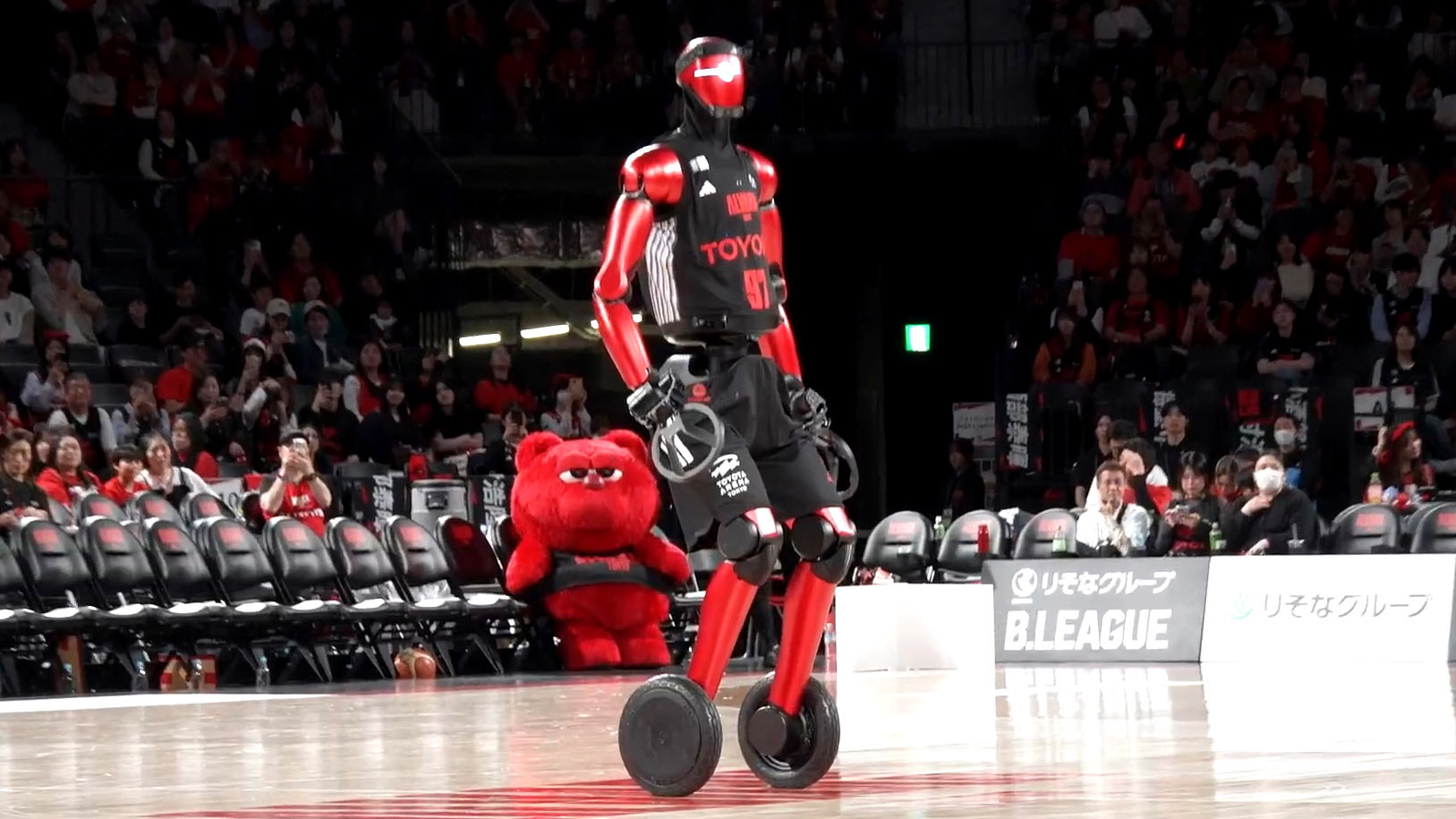
The CUE7 is a triumph of mechatronics. Standing at an imposing 7 feet 2 inches (2.18 meters) and weighing 163 pounds (74 kg), the robot is built for presence. However, its physical stature is secondary to the "brain" housed within its frame.
Sensory Perception and Kinematics
The CUE7 is equipped with an array of cameras and sensors that blanket its frame, from its head down to its wheel-based drive system. These sensors feed real-time environmental data into an onboard processing unit that calculates the exact force, angle, and release point required to sink a shot.
Unlike its predecessors, which were largely focused on the act of shooting, the CUE7 has evolved into a "player." It can navigate the floor, maneuver around obstacles, and perform complex dribbling patterns. This requires an advanced degree of balance, as the robot moves on two wheels, constantly adjusting its center of gravity to maintain stability while performing athletic motions.
The Cost of Innovation
For those interested in building a robotic squad, the CUE7 carries an estimated price tag of $150,000. While this might seem steep for a hobbyist, it is a relatively modest investment for a machine that represents the pinnacle of Toyota’s research into bipedal-style mobility and predictive AI.
Supporting Data: Why Basketball?
Why would a global automotive leader dedicate so much time to a basketball-playing robot? The answer lies in the limitations of current robotics. In a factory, robots operate in predictable, static environments. They weld, paint, and bolt with unerring precision because the environment is controlled.
Basketball, however, is chaotic. A player must account for gravity, air resistance, court friction, and the movement of the ball. By mastering the game, Toyota’s engineers are solving fundamental problems in "Physical AI." The ability to calculate a trajectory in real-time and execute a movement with perfect physical synchronization has direct applications in:

- Autonomous Vehicle Navigation: If a robot can navigate a basketball court while moving a ball, a car can better navigate a busy urban street.
- Advanced Logistics: The motor control required for a robot to dribble a ball is remarkably similar to the control required for a warehouse robot to handle fragile goods at high speeds.
- Human-Robot Interaction: By designing the CUE7 to look and move like a human, Toyota is exploring how machines can safely and intuitively work alongside people in shared spaces.
Official Perspectives: The Philosophy of "Waku-Doki"
Toyota’s leadership has often cited the concept of Waku-Doki—a Japanese phrase meaning "heart-pumping excitement." The CUE project is the embodiment of this philosophy. During the recent debut, Toyota representatives emphasized that the CUE7 is not meant to replace human athletes, but to push the boundaries of what is mechanically possible.
The team behind CUE7 describes the robot’s occasional "misses" as a point of pride. In the world of high-speed computation, perfection is expected. By acknowledging that their machine is not always perfect, the engineers are highlighting the complexity of the task they have set for themselves. It is a reminder that even at the height of technological advancement, the physical world retains a degree of unpredictability that even the best algorithms are still learning to conquer.
Implications: The Future of Physical AI
The shift from the CUE6 to the CUE7 is not merely an iterative update; it is a signal of the maturation of Toyota’s robotics division. The transition from a stationary "free-throw machine" to a mobile, dribbling, court-roaming entity marks the move toward a new era of general-purpose robotics.
The Road Ahead
As the CUE7 continues to perform at Alvark Tokyo games, the data gathered will undoubtedly inform Toyota’s next generation of mobility products. The lessons learned in balancing a 7-foot-tall robot on wheels will likely find their way into the next generation of Toyota’s autonomous shuttles, personal mobility devices for the elderly, and advanced manufacturing assistants.
Moreover, the CUE project serves as a powerful recruiting tool for Toyota. It showcases the company not as an old-guard manufacturer, but as a hub for the world’s most brilliant robotics engineers. By fostering a culture that allows employees to build world-record-breaking robots on the side, Toyota ensures it remains at the forefront of the technological revolution.
A New Standard
The CUE7 is more than a spectacle. It is a testament to the fact that when an organization as deep-rooted as Toyota decides to pivot, it does so with the weight of decades of manufacturing expertise. The basketball court is a challenging laboratory, but for the engineers at Toyota, it is merely the practice range.
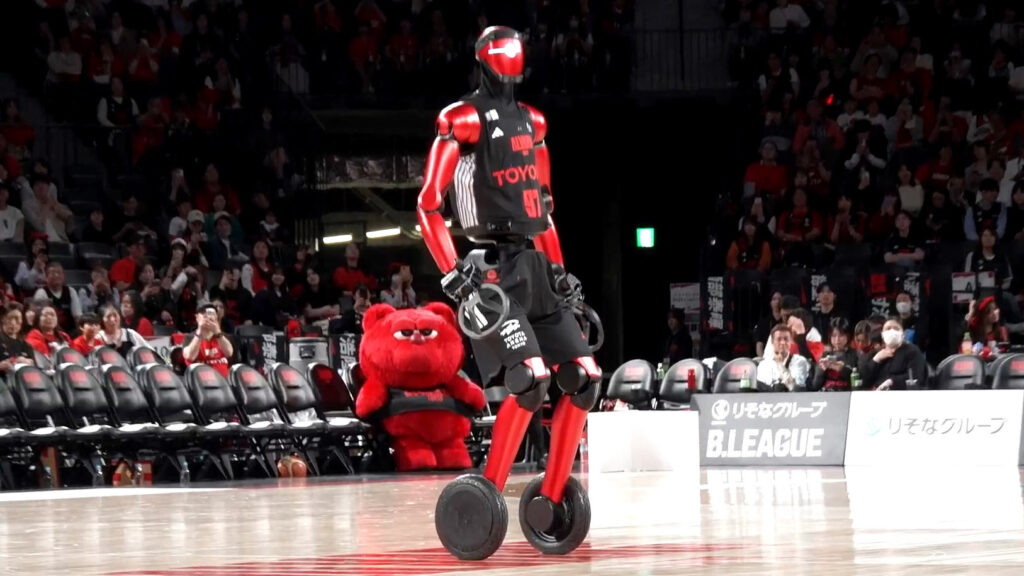
Whether the CUE7 will ever play a full game against an NBA superstar remains a question for the future. But one thing is certain: as the robot maneuvers across the court with its sleek, black, Toyota-branded exterior, it is doing more than just putting a ball through a hoop. It is proving that the future of robotics is not just about computing power—it’s about the grace, balance, and physical intelligence required to interact with the world around us.
Toyota’s leap from the textile mill to the basketball court is a long journey, but if the CUE7 is any indication, the automaker’s best work is still ahead of it. The next time you see a Toyota on the road, remember the robot that can shoot the lights out—and realize that the engineering DNA behind that car is just as sharp, just as precise, and just as capable of hitting its mark.